On Pushers for the Seiko 6138 and 6139 Chronographs

This post will take a deep dive into identifying and maintaining pushers- how to install gaskets and straighten bent ones. We will also look at differentiating between aftermarket and original Seiko pushers. Finally, an observation of a curious change in the internal design of the later years compared with those from the initial ‘PROOF’ years will also be showcased. There is an index below to help navigate this post.

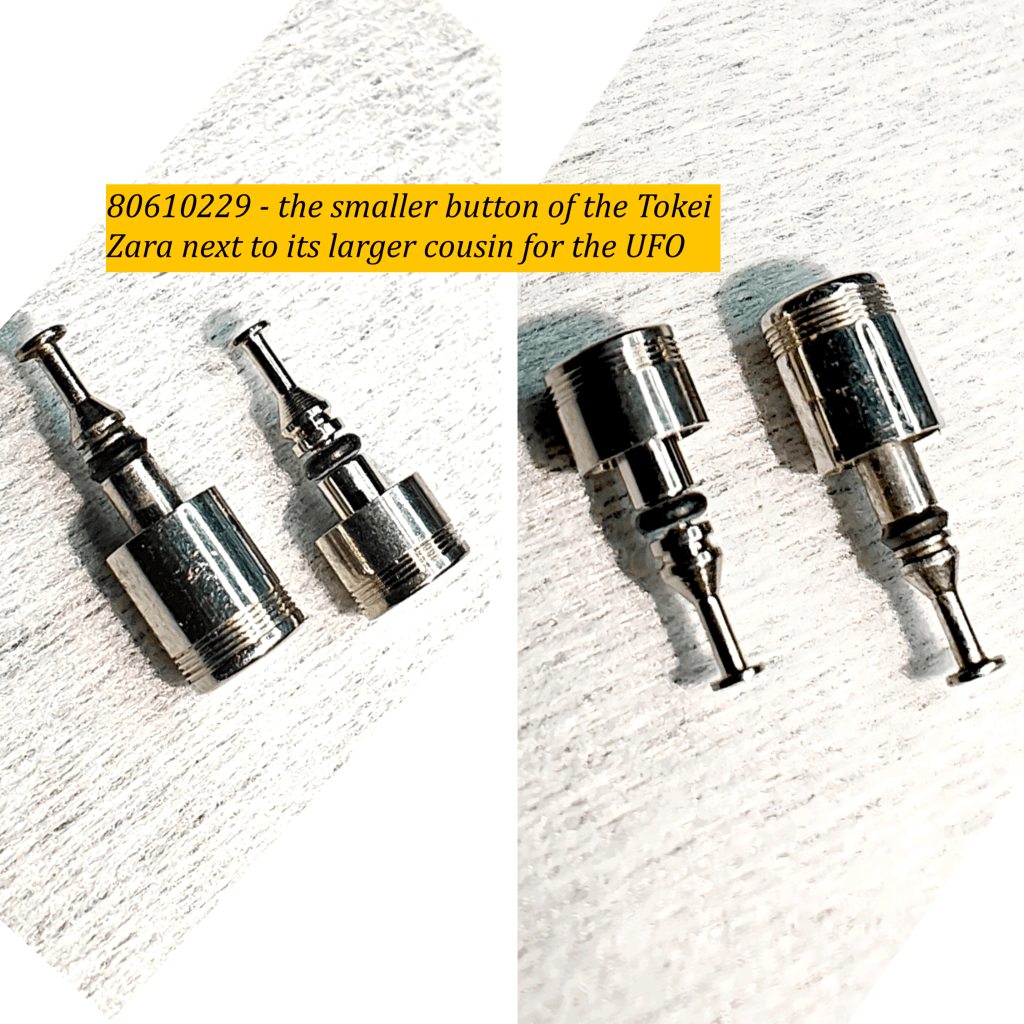
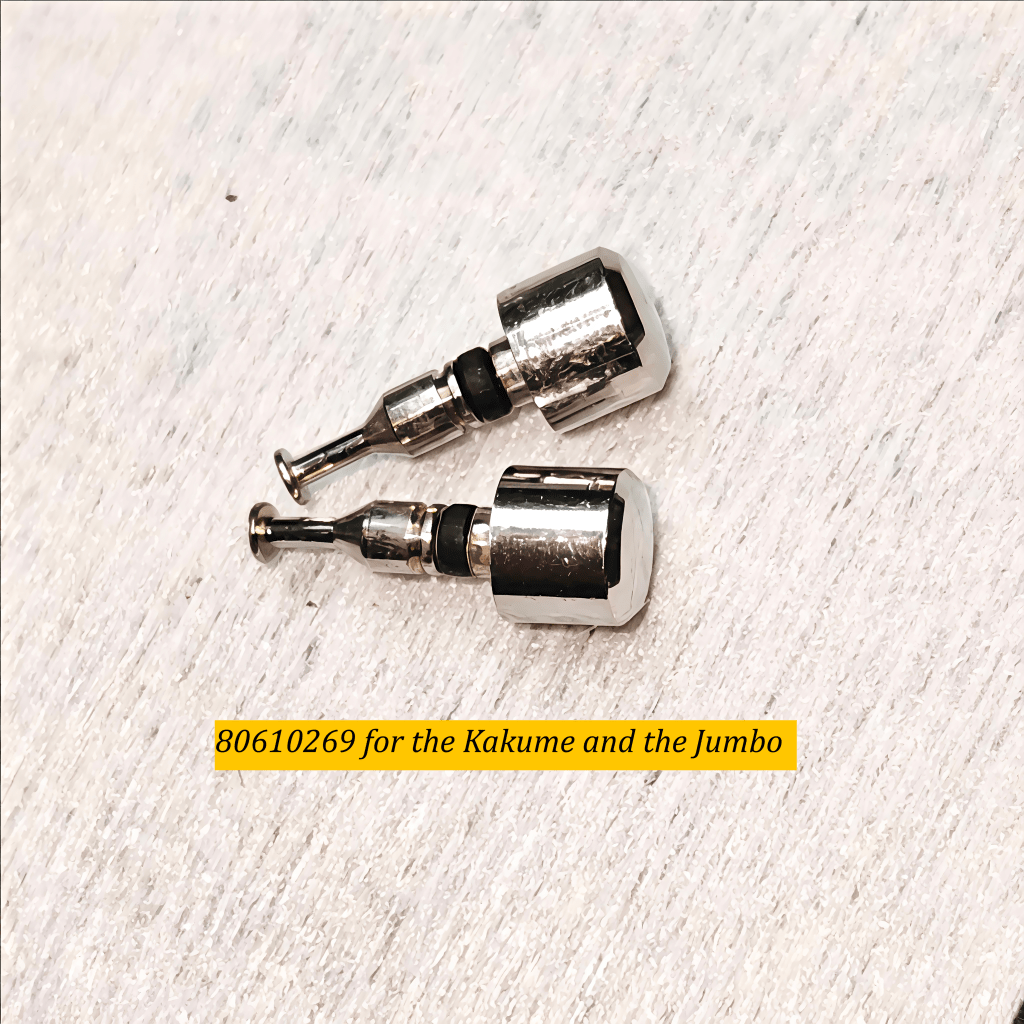
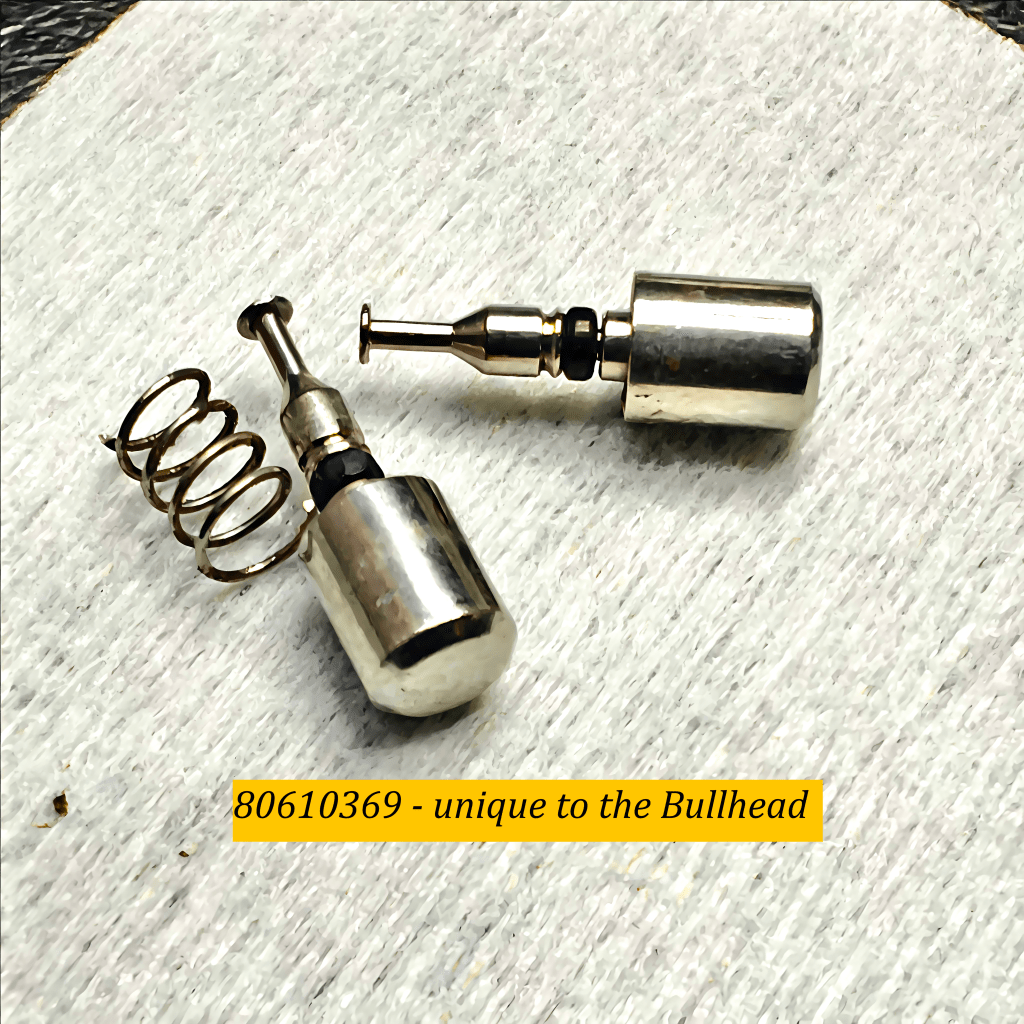
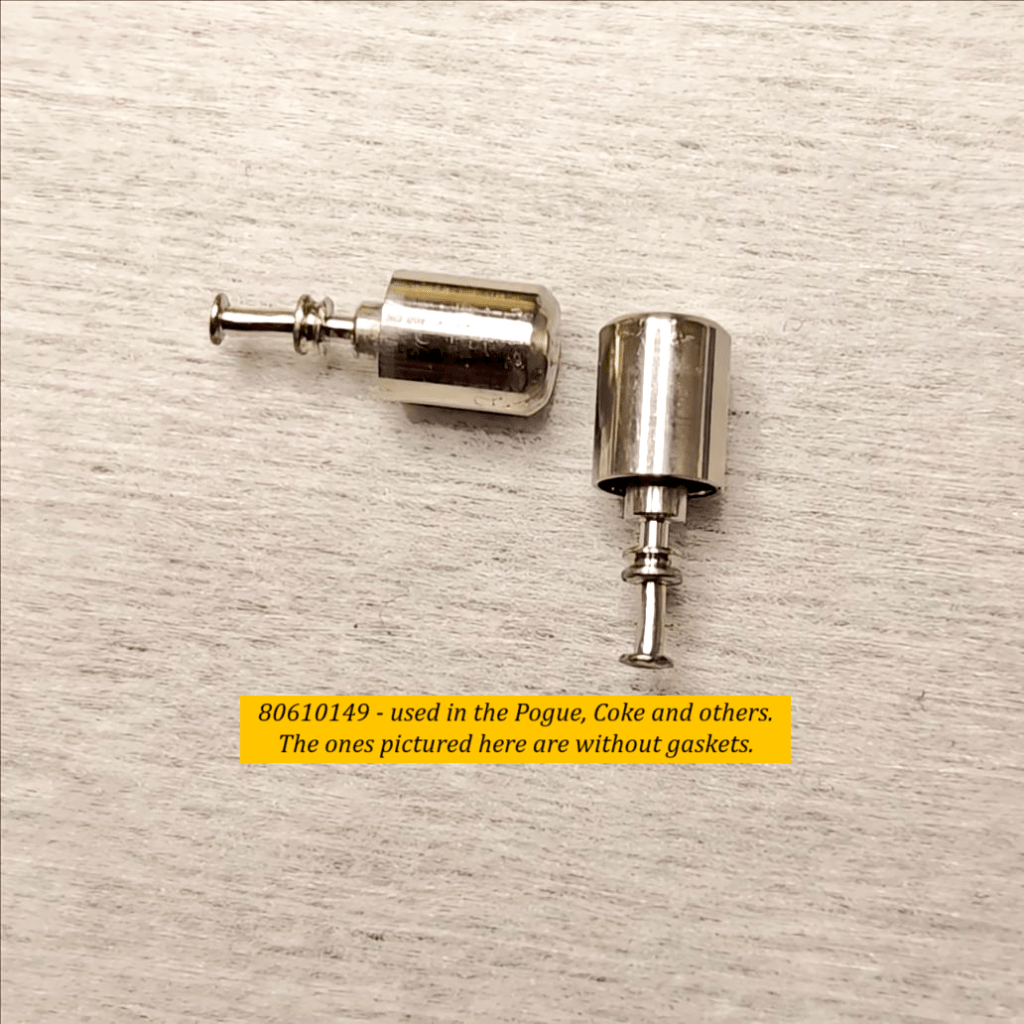
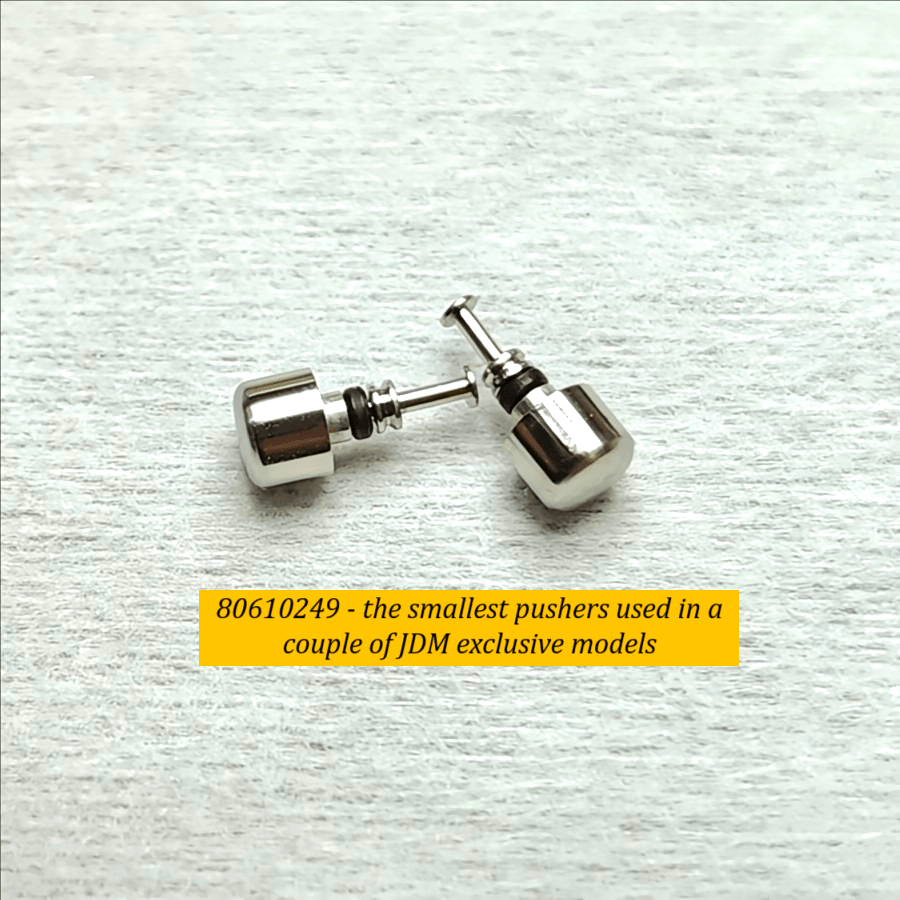
The pusher or ‘BUTTON’, to use the official Seiko terminology, is the immediate visual identifier for any chronograph and looking at the sheer variety of the 6138 and 6139 models, it is inevitable that the buttons too would be manufactured in an assortment of specifications and finishes to suit the cases they would be planted in. In total, I have been able to identify EIGHT different buttons that cover the thirty or so chronographs from the 6138/6139 stable; seven basic steel buttons and the eighth being one of them Gold Plated.

  1. Part I – Identification & Part Numbers of Buttons
  2. Part II – Gasket Installation & Straightening Bent Pushers
  3. Part III – Aftermarket & Original Buttons – The Differences
  4. Part IV – Buttons From the ‘PROOF’ years compared with the later years

Part I – Identification & Part Numbers of Buttons

In order to structure this effectively, it would help to mark the salient measurements with which identifying the pushers become convenient. These are:
> the overall length of the pushers marked with the letter ‘A’; and
> the length of the top part of the pusher marked with the letter ‘B’, depicted below.

The dimensions ‘A’ and ‘B’

The table below matches the Seiko Case Number and their nicknames with the button part number and its dimensions – ‘A’ & ‘B’ as well as my notes. There is some variation in the measurements which probably is partly due to manufacturing tolerances and partly due to deformation over the years.
Images are in a slideshow below.

Case No.NicknameSeiko Part NumberOverall Length ‘ A ‘Push-Part Length ‘B’Other information
6138-001xUFO or Yachtsman8061020911.70 – 11.80mm5.10mm‘Piston Ring’ design
Shared with 6138-7000
6138-0020Tokei Zara806102299.90mm3.10mm‘Piston Ring’ design
Unique to this case
6138-0030Kakume8061026910.50 – 10.60mm3.40mmShared with
6138-300x
6138-004xBullhead8061036911.90 – 12.00mm4.90 – 5.00mmLongest button variant
Unique to this case
6138-300xJumbo8061026910.50 – 10.60mm3.40mmShared with
6138-0030
6138-7000Slide Rule8061020911.70 – 11.80mm5.10mm‘Piston Ring’ design
Shared with 6138-001x
6138-800xBaby Panda806101699.70 – 9.90mm4.00mmCommon in many
6138 and 6139 cases
6138-8010Holy Grail8061014910.70 – 10.80mm5.00mmUsed in the Pogue
and other cases
6138-8020Panda80610169 for Steel
80610141 for G.P.
9.70 – 9.90mm4.00mmThe only gold
plated pusher
6138-803xJPS – John
Player Special
80610169 for Steel
80610141 for G.P.
9.70 – 9.90mm4.00mmSame as Panda and
other cases
6139-600xPogue and Cevert8061014910.70 – 10.80mm5.00mmUsed in many models
6139-601xBruce Lee806101699.70 – 9.90mm4.00mm80610141 for gold plated
6139-602xPulsations8061014910.70 – 10.80mm5.00mm
6139-603xCoke8061014910.70 – 10.80mm5.00mm
6139-604xGhost806101699.70 – 9.90mm4.00mm
6139-700xDecimeter Scale8061014910.70 – 10.80mm5.00mm
6139-701xMilitary8061014910.70 – 10.80mm5.00mm
6139-702xFlying Saucer8061014910.70 – 10.80mm5.00mm
6139-703xBaby Jumbo806101699.70 – 9.90mm4.00mm
6139-705xJDM Sandwich Dial806101699.70 – 9.90mm4.00mm
6139-706xSunrise806101699.70 – 9.90mm4.00mm
6139-707xBaby Jumbo806101699.70 – 9.90mm4.00mm
6139-708xHexagon806101699.70 – 9.90mm4.00mm
6139-710xHelmet/Darth Vader806101699.70 – 9.90mm4.00mm
6139-800xBarrel806101699.70 – 9.90mm4.00mm
6139-801xBlack PVD806101699.70 – 9.90mm4.00mm
6139-802xRetro Racer806101699.70 – 9.90mm4.00mm
6139-803x806101699.70 – 9.90mm4.00mm
6139-804x806102498.70mm3.00mmshortest pushers
6139-805x806102498.70mm3.00mmshortest pushers

Part II – Gasket Installation & Straightening Bent Pushers

All the buttons use the same gasket number DJ0060B which has a ‘D’ shaped profile. The inner surface of the gasket that is in contact with the pusher is flat while the outer side which is in contact with the case tube is rounded. Old gaskets will almost always be deteriorated to the point where replacement is absolutely essential to protect the movement, dial and hands from moisture damage. DJ0060B gasket reproductions are in plentiful supply online.

Any sort of maintenance work will be much easier if the button is held securely. This can be achieved in either of two ways – a 4.00mm hole drilled in a piece of hardwood can be used to hold the button or a dedicated inexpensive tool can be used.
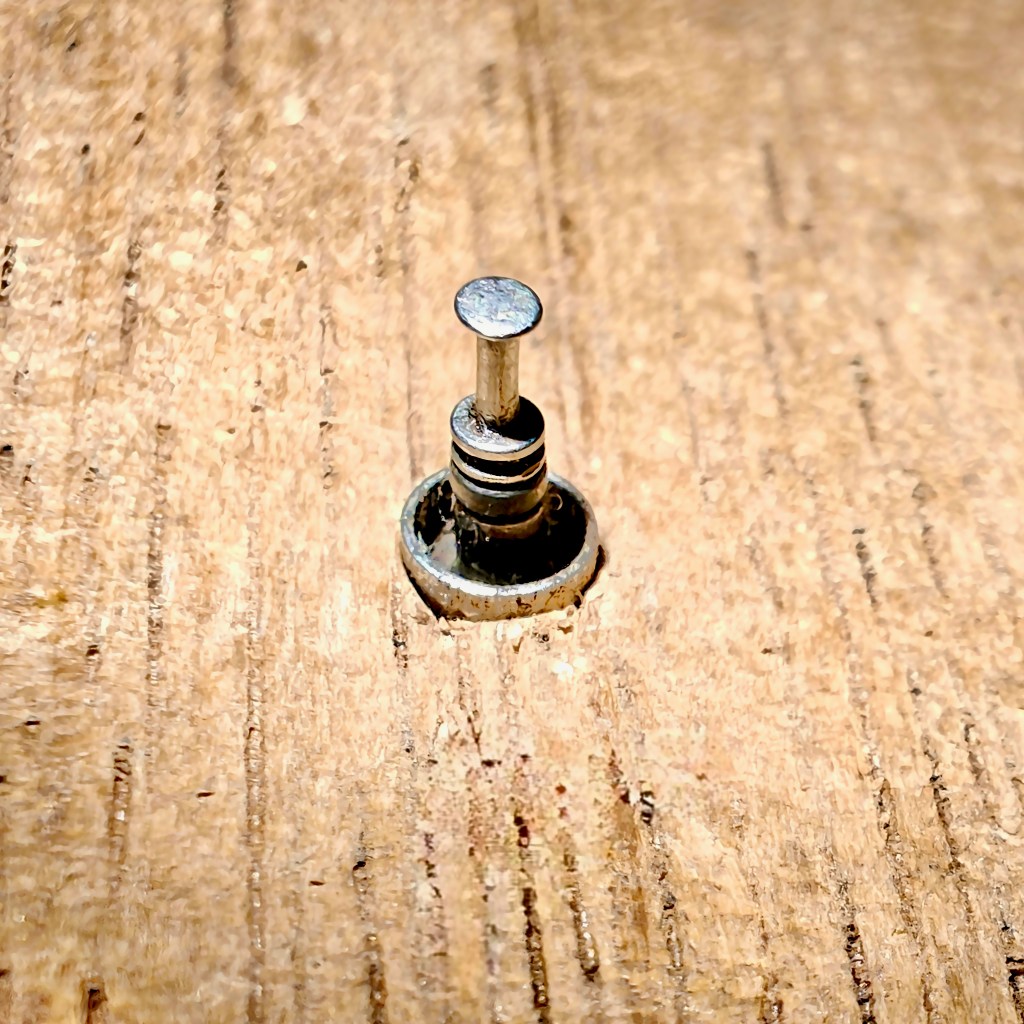
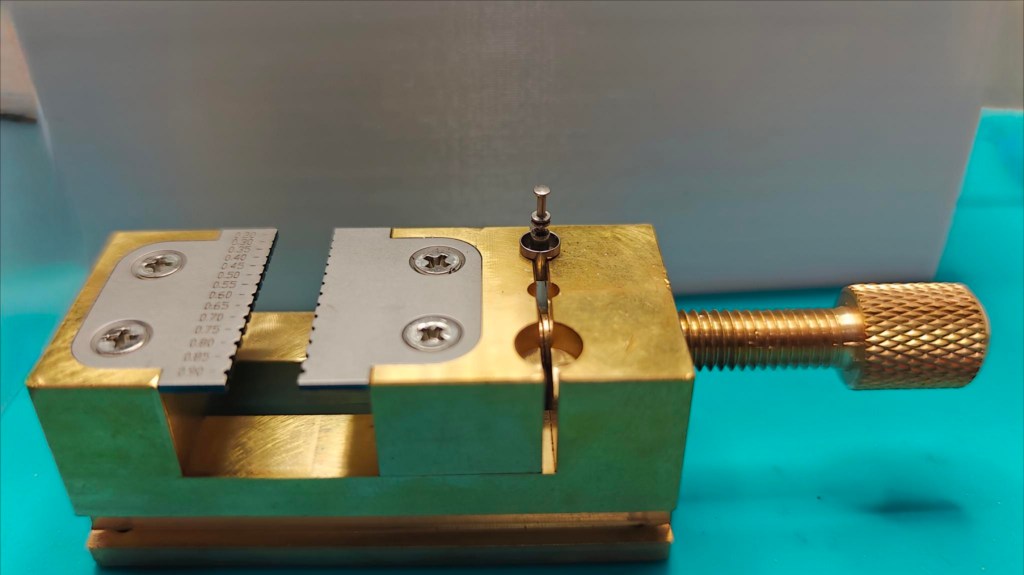
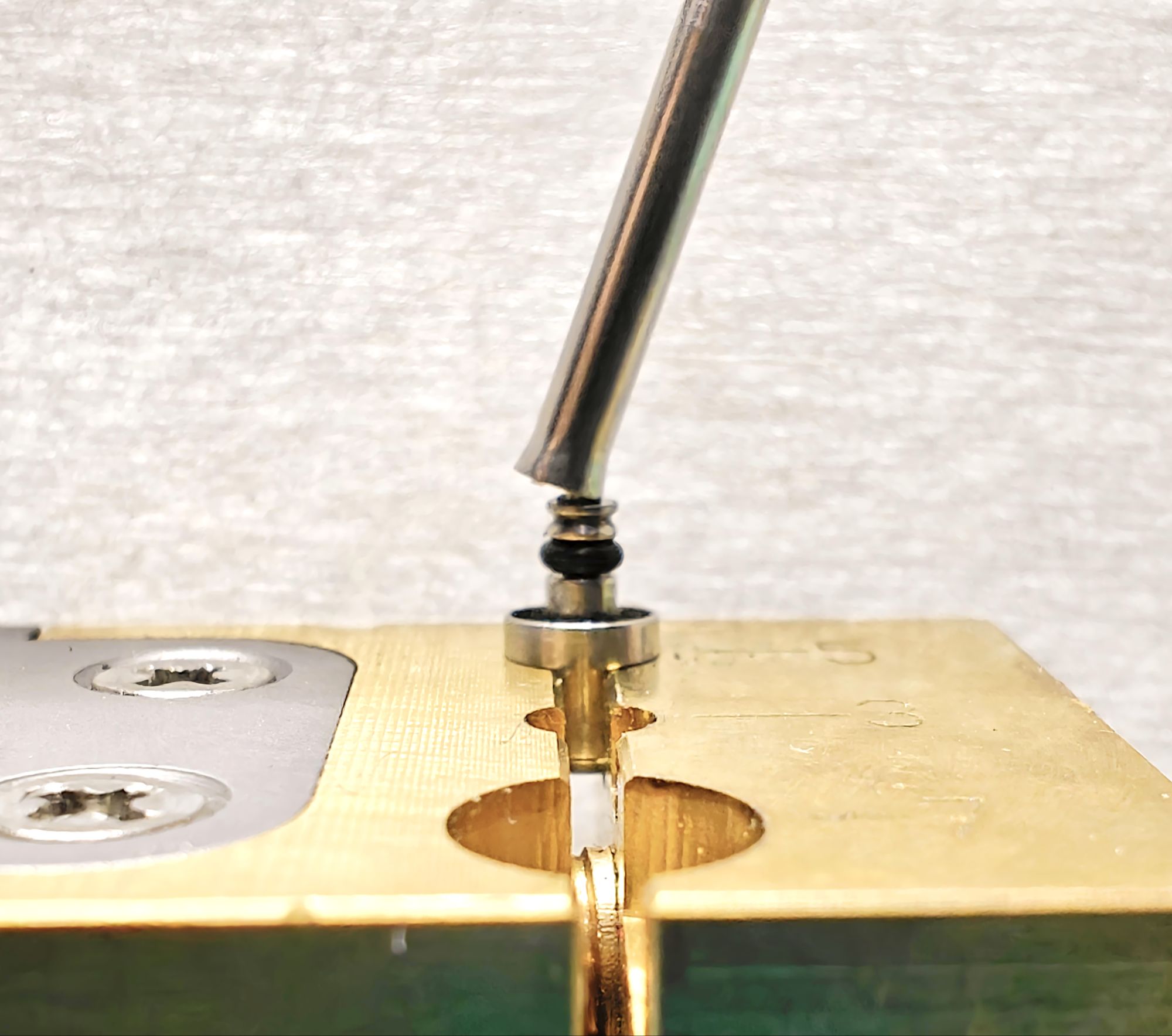
Installing the gaskets is a fussy job to say the least- the tiny rubber rings, when stretched, easily fly away at the slightest mishandling. In order to affix the gasket to the correct groove in the button, a home-made tool will make life much easier. For that one would need two things: a 2.0mm thick spring bar; and a 1.6-1.8mm round metal bar- an old screwdriver blade, a steel nail or a knitting needle are good candidates. Next :-

  • Pull out the ends of the spring bar- only the tube is needed.
  • One end of this tube has to be flared out so that it can slide over the ring BELOW which is the groove where the gasket has to be slid into. This can be done with a staking tool, a drill bit or any appropriate alternative.
  • Shape the nail or screwdriver blade to have a smooth pointed tip either with a powered rotary tool like a Dremel or by hand.
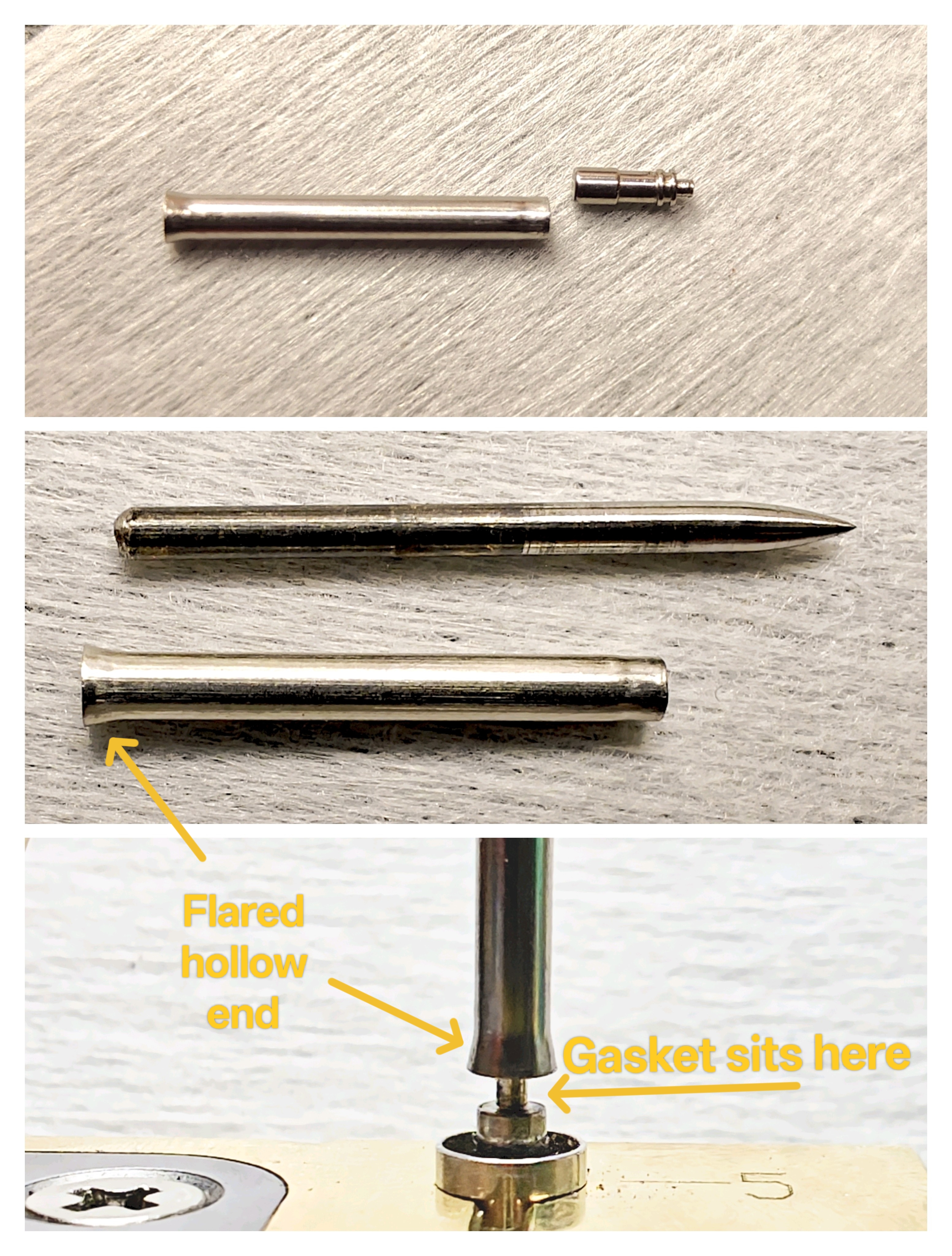
Finally superglue the pointed piece into the tube at the end opposite the flare. It should look like this: A pointed tip at one end and a flared hollow tube at the other.
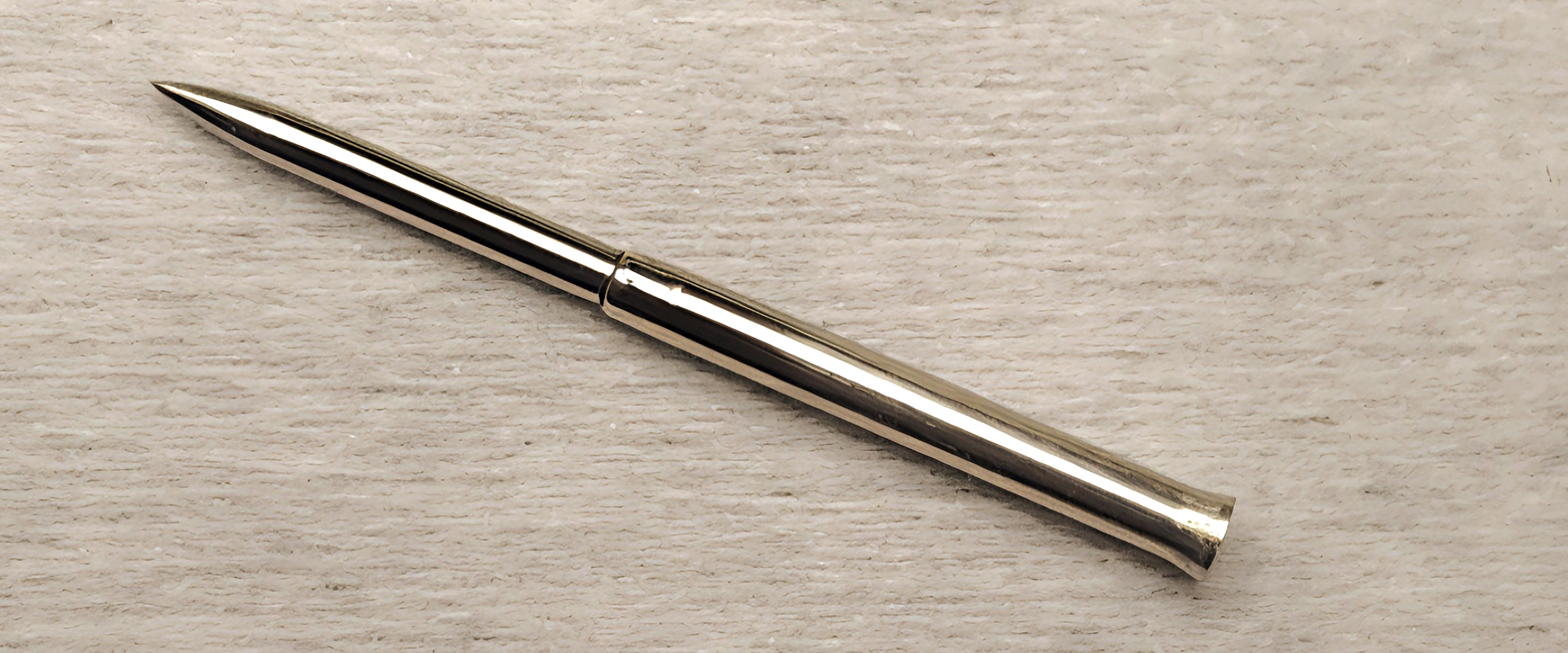
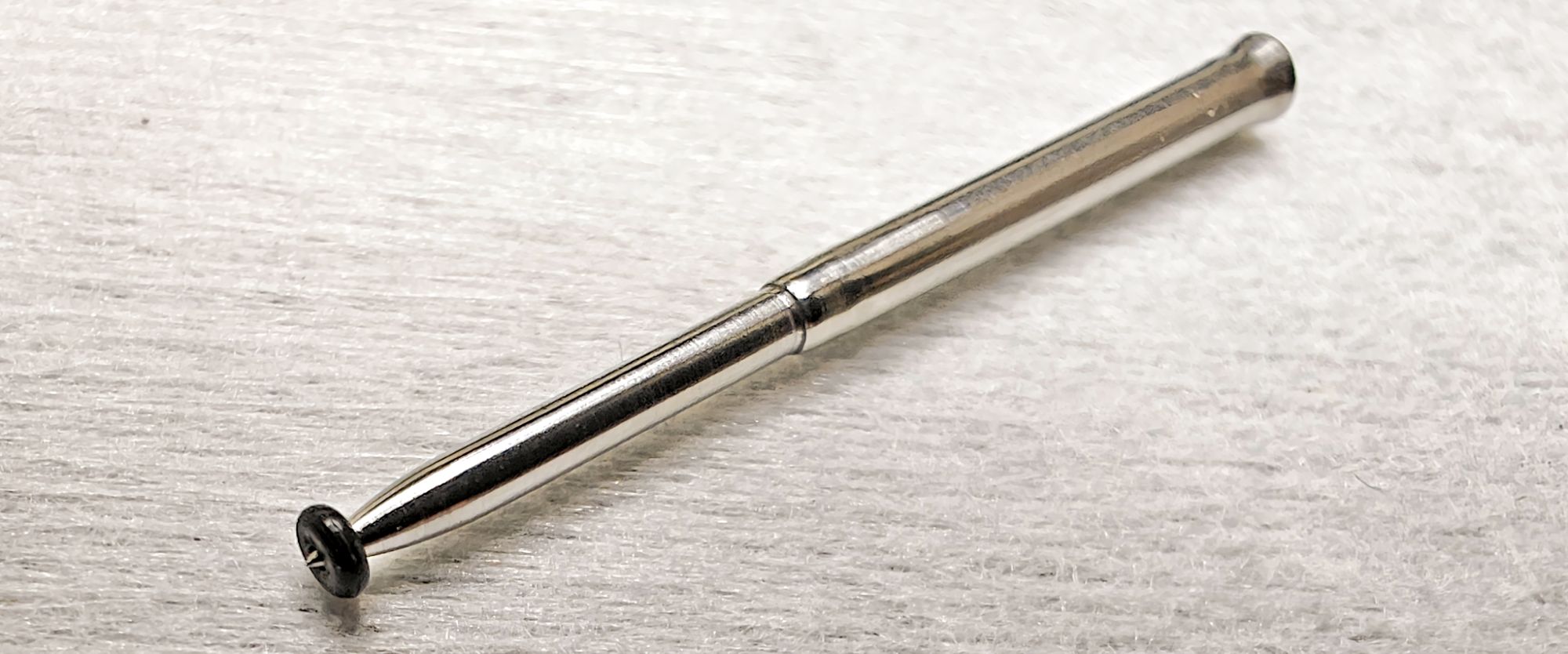
To fit the gasket, first spear the gasket onto the gaskettool™ which has been lightly lubricated with silicone grease as shown in my LUBRICATING GUIDE. Slide the gasket down with the help of tweezers right into the gasket groove.
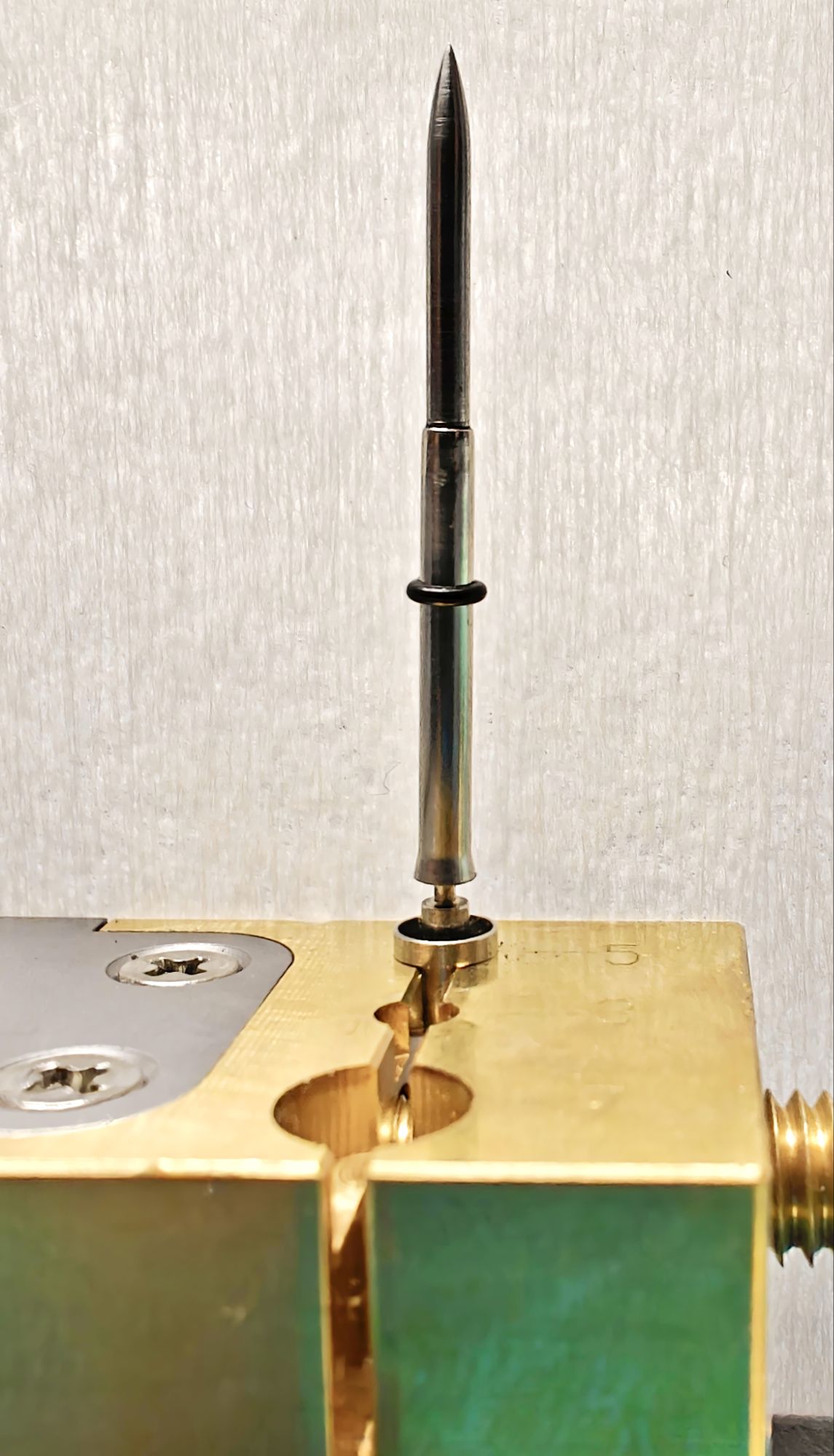
Straightening bent pushers is a simple affair. After securing the button as described above, simply use a piece of thick pegwood and push gently where needed.

Part III – Aftermarket & Original Buttons – The Differences

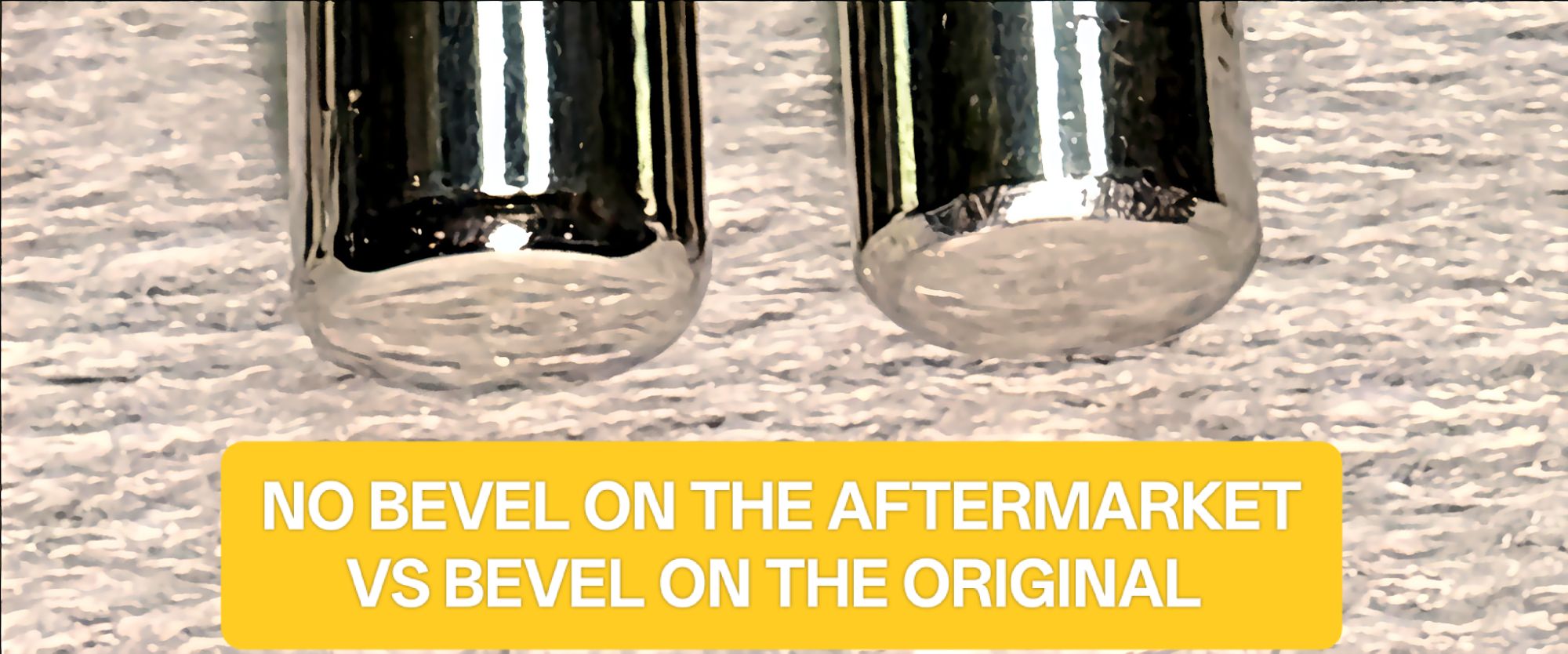
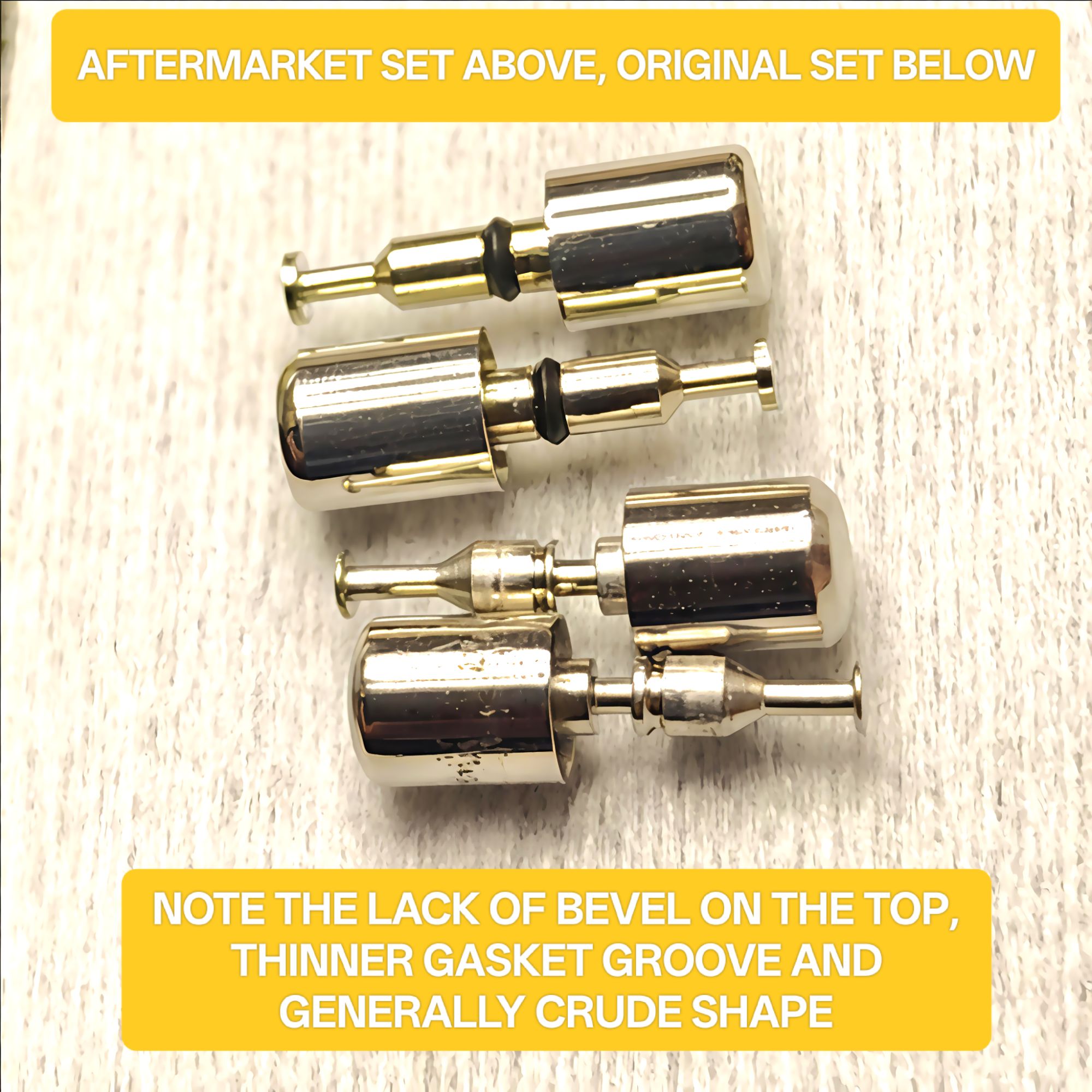
Modern reproductions of the buttons are cheap and plentiful. Good enough for use, there are nevertheless noticeable differences from the original ones. Succinctly and with images for clarity, they are:

  • Lack of a bevel at the top. The aftermarket ones are simply rounded.
  • The groove for the DJ0060B gasket is not as wide as the original; presumably to grip the generic narrow gaskets better.
  • Build quality is not as refined as the original ones with crude grooves and shape. The steel probably differs as well but I lack the expertise to comment on it.
  • The round tips at the end which interface directly with the movement are quite thicker than the original ones.

Part IV – Buttons From the ‘PROOF’ years
compared with the later years

While taking the photographs and researching for this post, I have since observed a curious variance in the construction of the pushers. When comparing the design between the oldest watches having PROOF dial / PROOF caseback & the 6138A/6139A movement and those from the later resist series with the 6138B/6139B movement, the newer buttons have an extra groove or gap between the gasket groove and the tip of the button.

The older buttons do not have that extra groove and are thus of a ‘simpler’ and smoother design. What prompted the redesign to incorporate the extra groove or gap is a mystery and my best guess is that it may have something to do with the tooling and manufacturing process.

With the limited examples I had available with me, I have posted some images below and would welcome any information on this.

I hope this lengthy post is of some help in identifying buttons from a mixed bag and aid in maintaining this integral and important part of the chronograph mechanism, pushing our cherished vintage Seikos to run for another half-century!

3 responses to “On Pushers for the Seiko 6138 and 6139 Chronographs”

  1. wanderlustdazzlingc156f4cf21 avatar
    wanderlustdazzlingc156f4cf21

    Hi
    Clive here from the Retro FB group.
    Good to read this interesting article about the different Seiko pushers. Love the info on making a spring bar tool, ingenious!
    My Facebook account got hacked last year and I closed the email account and mobile number attached to it. Facebook have blocked my account. Have tried lots of times to re-open it or set a new one up, but get weird stuff happening that makes me think the hacker is sitting waiting …… paranoid or what!!
    I hope you and your family are well? I must congratulate you on your very well written and put together articles.
    I’m still bashing watches into shape and have even had an attempt at clock wrecking.
    Messing with the timepieces has been a saviour for me through a hard patch of different illnesses and the stress of getting hacked!
    Not looking for any sympathy…. it’s life and we have to go with the flow.
    Look forward to reading more of your articles.
    Keep ticking!
    Clive.

    Like

  2. Saksham avatar
    Saksham

    This is very well written!

    Like

Leave a comment

3D Printed Goodies for the Hobbyist

A modern innovation in material sciences has infiltrated the decades old realm of watch repair and restoration, providing amateurs such as myself with access to a small selection of the seemingly endless variety of tools and paraphernalia required for pursuing this hobby.

I am talking, of course, about the prolific expansion of the consumer-grade 3D printers’ market. Although the technology was developed in the 1980s, the patents for FDM (Fused Deposition Modelling) machines – the ones with a spool of plastic filament at one end and a hot extruder at the other that we are familiar with – came into the public domain in 2009 and it took another few years for the printers to be available in the affordable mass market.

A caveat here is that nearly all of the tooling and equipment related to watchmaking as well as repairs and restoration have to meet exact and perfect standards because of the minuscule scale at which most of the parts function. For example, the pivots of the balance wheels measure around 0.1mm in size – as thick as just 2 sheets of regular printer paper.

3D printing technology has a long way to travel before it achieves such a high level of accuracy and consistency in cheap consumer models but nevertheless, with the wide variety of filaments now available, there is a lot that can be printed in even the cheapest of printers just to make life a tiny bit easier – and deliver a sense of satisfaction in having a truly customised piece of equipment for yourself!

This is a continuously evolving field and tinkerers regularly come up with brilliantly thought-out designs and products. In this post I will share some of what I personally found very useful and may just be what you are looking for. A lot of 3D printed objects are ready to use hot off the printer but some may require additional hardware such as nuts and bolts or a bit of filing and cleanup for visual appeal.

TOOL HOLDER

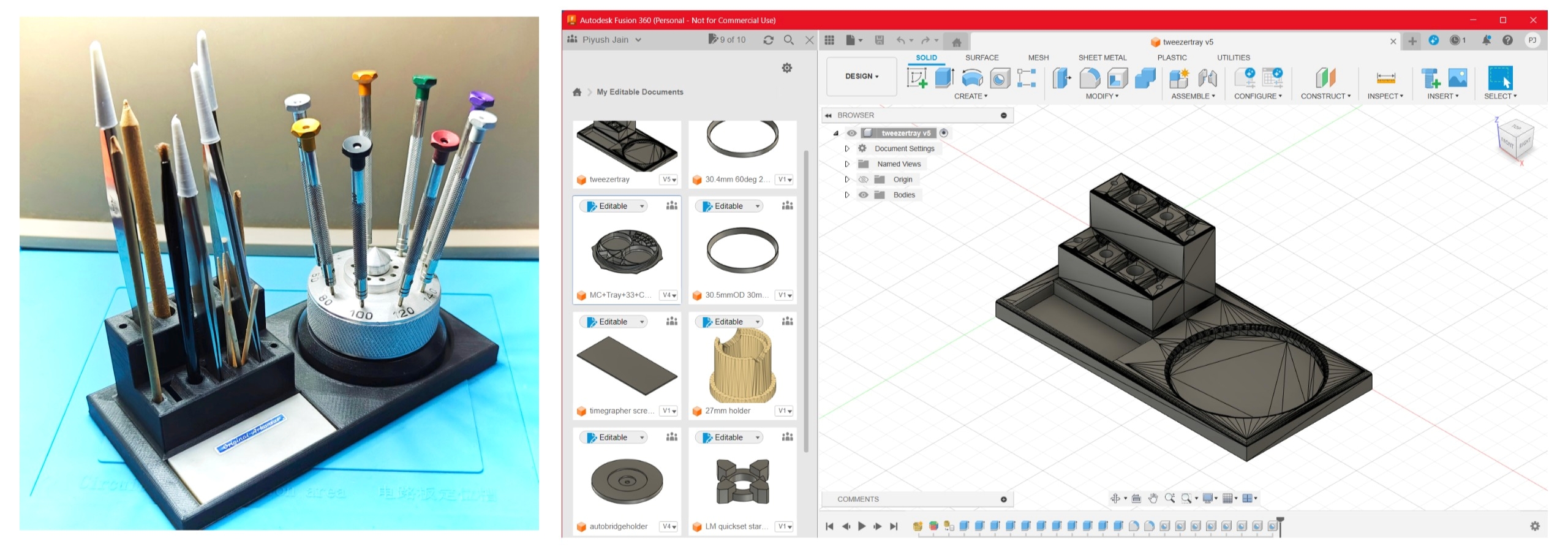
This is a multi-tool stand which holds the rotating screwdriver holder, an Arkansas stone, a few tweezers, brushes, pegwood sticks of varying thickness or something else you could fit in the slots. I actually customised it from a pre-existing design to suit me.

Its available as part of my designs and collection on a popular website where similar files are hosted: https://www.thingiverse.com/thing:6667638

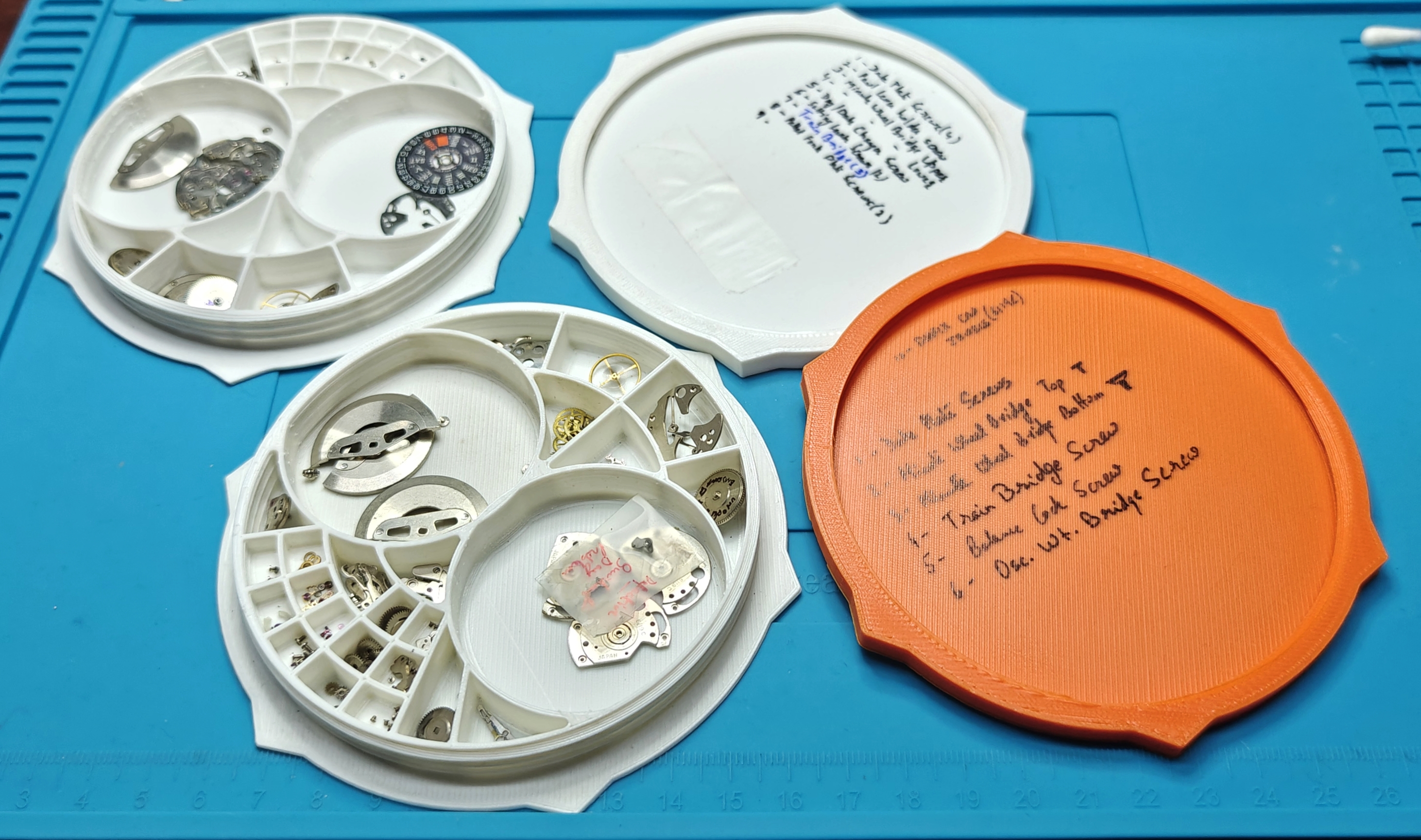
PARTS TRAY (with handwritten numbering and description)

These are compartmentalised trays with a screw-on lid. I printed a few variants of these and even redesigned one with a few re-shaped and some deeper compartments. Available at https://www.thingiverse.com/thing:5969770

MOVEMENT HOLDERS

These are movement specific holders with appropriate ports cut out. They work really well and are very stable. You can redesign them and even make them taller to suit your working height.

The designs are freely available online and quite a few of them are collected together here: https://www.thingiverse.com/appumaster/collections/29780125/things

TIMEGRAPHER STAND AND PC SOFTWARE

This is a very interesting print. Once assembled with some basic hardware, you will need a few extra components typically found in hobbyist electronics stores. A piezo buzzer (a.k.a. pickup microphone for musical instruments) wired to a battery-powered mini audio amplifier and connected to a PC with some free-to-use software results in a remarkably decent timegrapher! Changing the positions is not as convenient as in the Weishi 1000 but it gets the job done beautifully and if you are comfortable handling electronics, you can get a nice waveform to study the ticks and the tocks!

The free software is available at https://tg.ciovil.li/ and is quite well written with even an option for calibrating the readings with the internal clock of your PC motherboard.

OILER TRAY

Here’s tray to hold the cheap three-cup oiler and prop up your oilers too. Bonus space for rodico and pithwood for cleaning the tips.

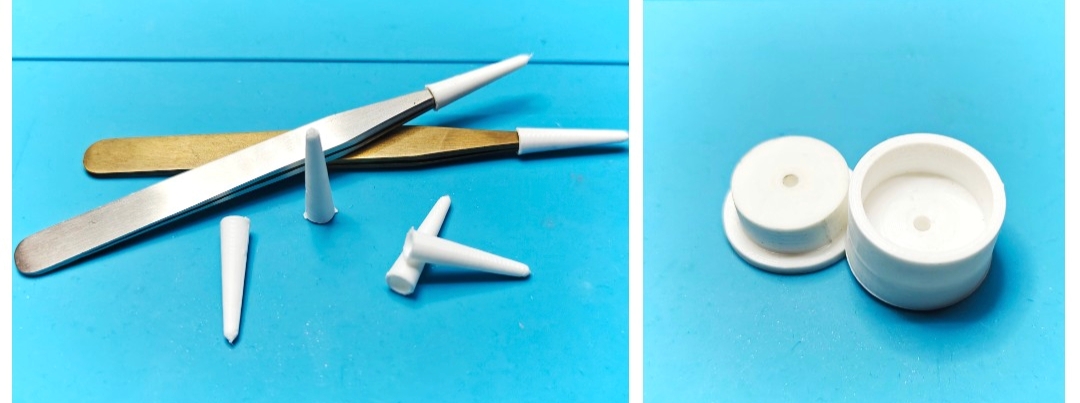
TWEEZER CAPS & BARREL CLOSER

Some simple tweezers’ caps to protect the tips from damage (and your own self from accidental stab wounds- ask me how I know!)

Also, a simple contraption to apply even pressure for closing barrel lids. Most people get by with the two-tweezer-sandwich but there’s is a custom tool for it.

MOVEMENT HOLDERS & CASING RINGS

Some covered movement holders with a cutout for the stem and crown. Also, if your Seiko dial spacers or casing rings are missing or broken do not despair. Print one instantly!

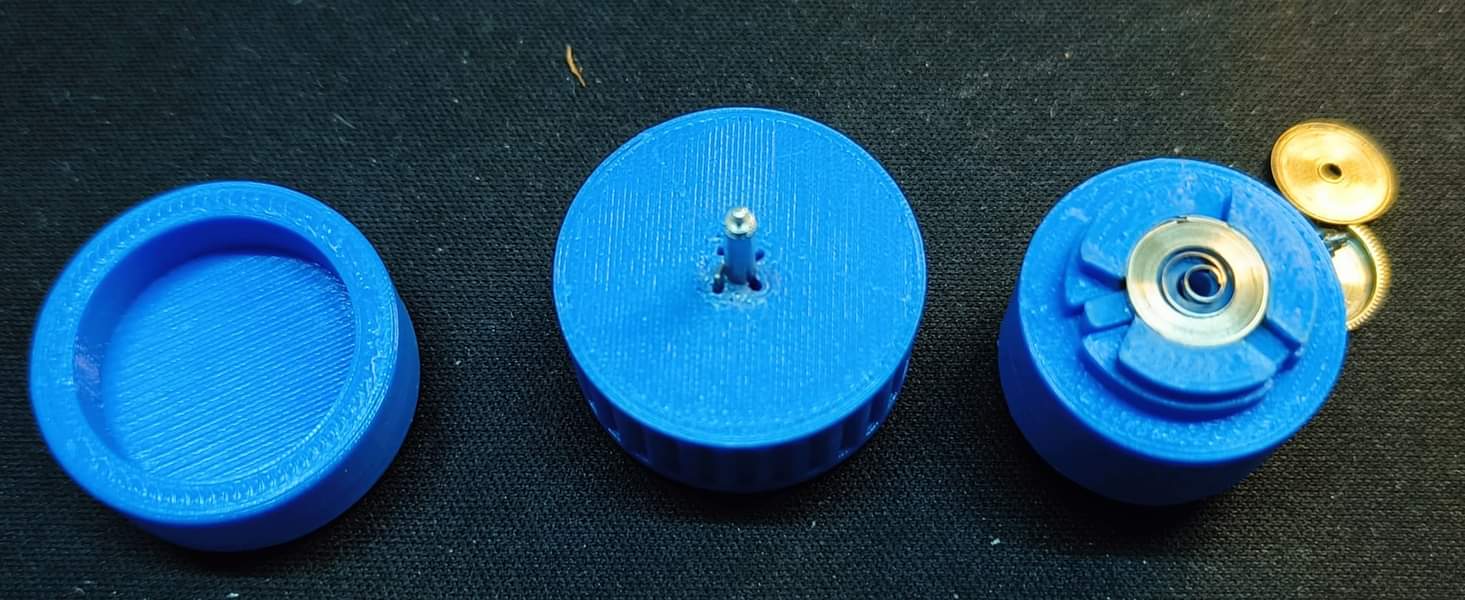
3D PRINTED MAINSPRING WINDER

Mainspring Winders – a much needed tool when working on mechanical watches and one that adds up to a hefty sum if you were to get all the sizes as well as left-handed and right-handed winding versions. This is one of the cheapest alternatives I’ve seen so far that really works very well. It’s customisable and supports a wide range of mainspring sizes, both left and right-handed. The designer has put up very good explanations and videos so you should definitely check them out at https://github.com/vishnu350/rs-mainspring-winder

Is it fiddly? Yes…

Can the mainspring jump out suddenly and look like a ball of worms? Yes… but who has used a branded mainspring winder that doesn’t suffer from the same problems?

To sum up, you can find a lot of free prints online as well as some paid designs. Other examples are a stand/ guide to keep the hand presser tool vertical when installing hands and even a 3D printed watch cleaning machine! The best part is that with some extra effort one can learn how to design objects in CAD software and make them come to life quickly and cheaply.

I would love to hear from you readers about your favourite 3D-printed tools and equipment that have become integral to this fascinating hobby. Whether it’s a custom watch stand, a specialized movement holder, or any other innovative tool that has made your watch repair and restoration projects easier and more enjoyable, please share your experiences. Your insights and recommendations can inspire and assist others in our community who are exploring the endless possibilities of 3D printing in watchmaking.

On Oils and Greases as prescribed by Seiko

Mastering the art of lubricating or oiling mechanical watch movements is intricate and the correct choice of lubricants has always sparked palaverous debate.

Novices such as myself have spent hours poring over numerous forum posts and have read lengthy comments by experienced watchmakers in trying to determine which lubricating oils and greases are the most essential and are ‘universally’ acceptable, if there is indeed such a thing.

The driving force behind this phenomenon are, firstly, the vast selection of modern Swiss made oils and greases, and secondly, their equally lofty prices. A widely circulated piece of internet folklore is the exorbitant cost of inkjet printers’ ink, which, according to a popular publisher, is quoted as US$5,654 per litre. Watchmaking is in another league however. The quintessential Moebius oil used in servicing watches – the Moebius 9010 – costs a staggering US$11,500 per litre at popular online retailers!

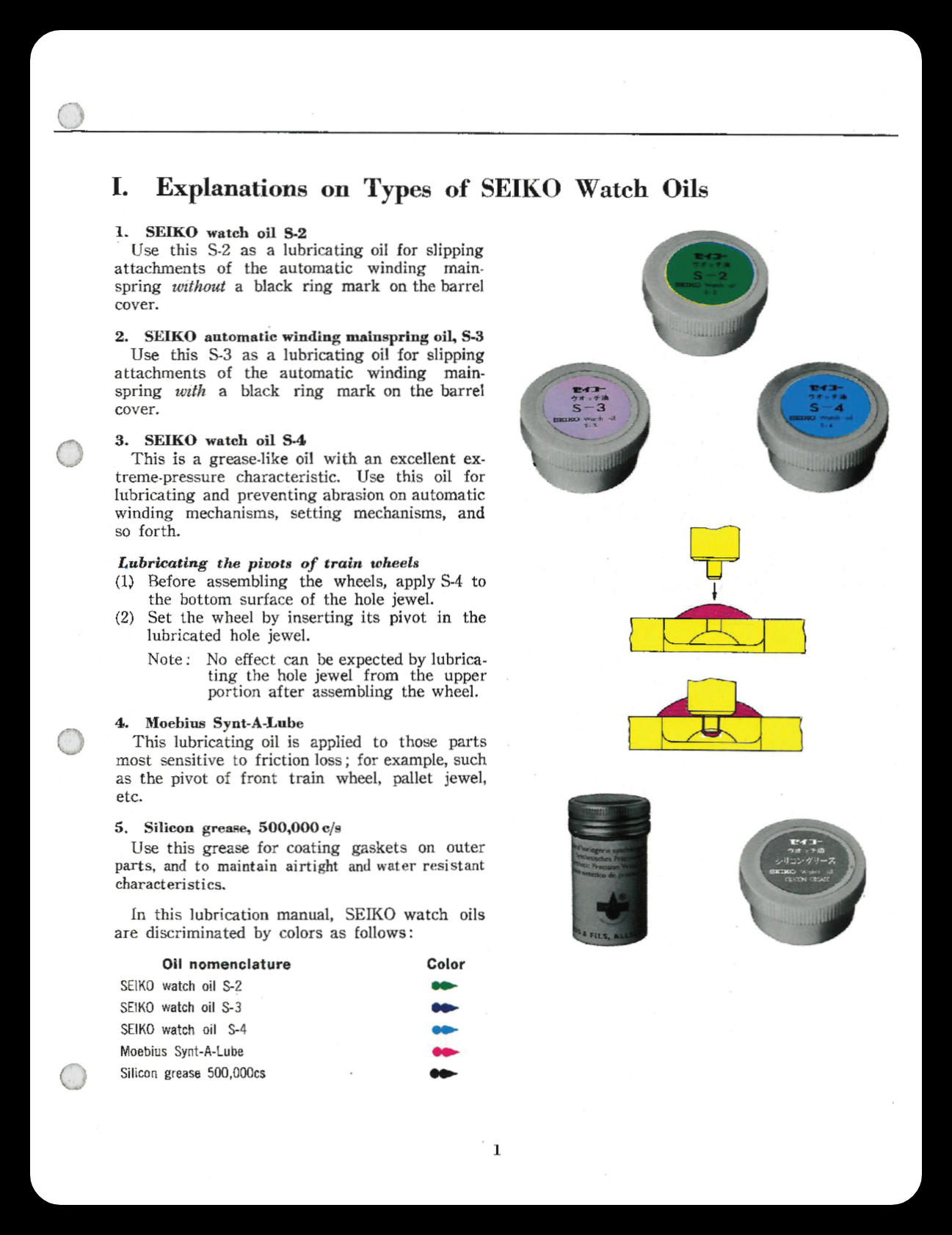
For the beginners however, there is respite when it comes to vintage Seiko. Perusing the official Technical Guide, we come across the following 5 basic oils, the simply named S-2, S-3 and S-4 made by Seiko Corp., the Moebius Synt-A-Lube and a regular silicon grease.

Additionally, there is an S-6 watch grease also by Seiko. It is recommended for servicing a few calibres of both the Suwa and the Daini factories such as the 6306, 6309, 7016 etc as well as the modern 7Sxx and 4Rxx calibres. However, I was unable to acquire it as it has been out of production for quite some time. Experts liken it to a soft gel like silicon-based grease and is needed for the ‘pawl lever and second reduction wheel of automatic winding mechanisms’ in these calibres. Moebius HP-1300 or the Seiko S-4 is an alternative.

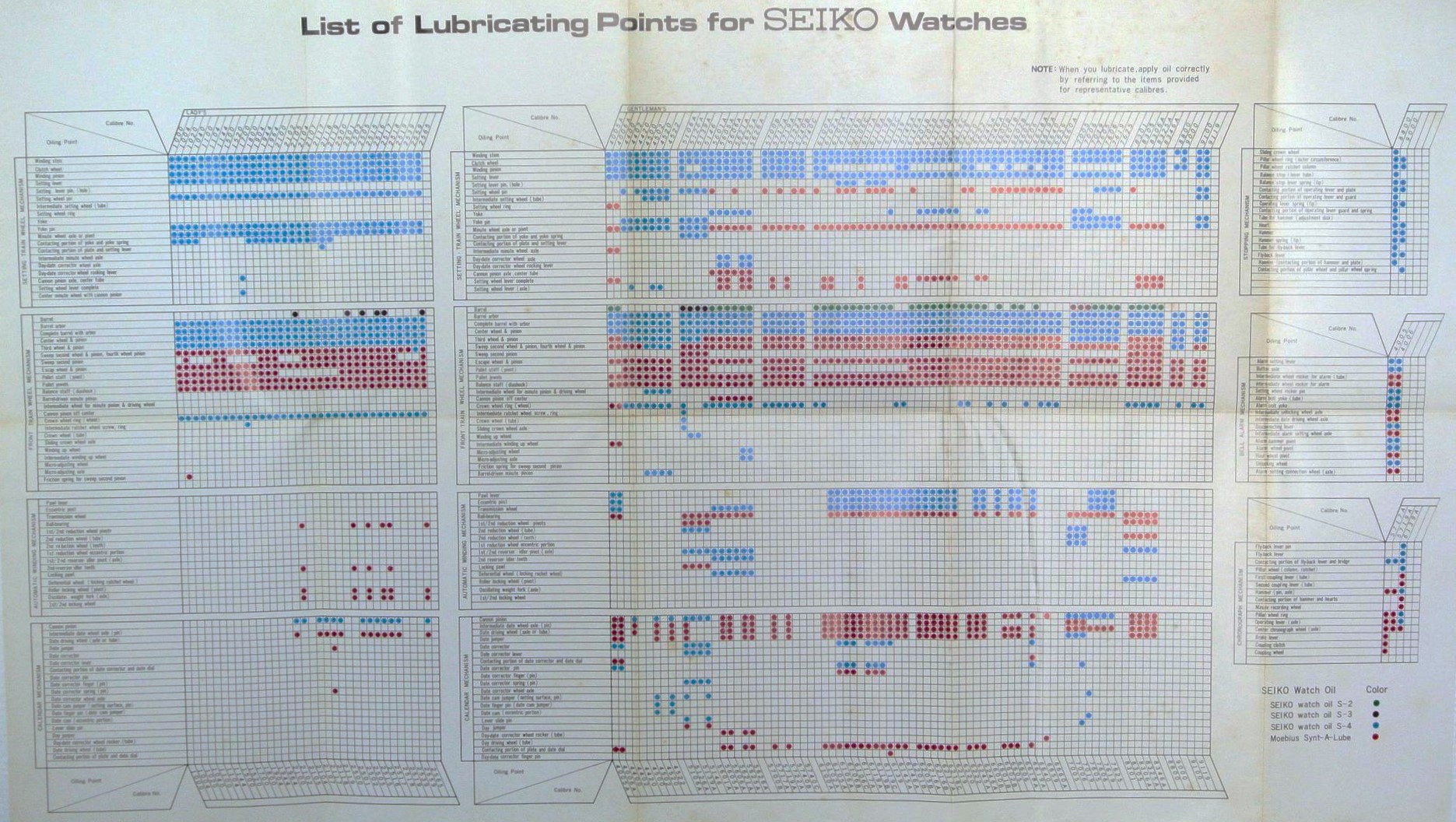
There is also this concise and efficiently presented chart of lubricating points for Seiko watches available on the internet and I am currently looking for a higher resolution one or an actual print. If any of you readers can point me in the right direction, it will be most helpful.

Similar to the S-6, the S-2 mainspring grease is also long out of production. It was a graphite based thick grease for ‘slipping attachments of the automatic winding mainspring’, otherwise known as “BRAKING GREASE”.

The S-3 mainspring grease is also another graphite based braking grease and is thick and slightly oily. Others as well as I have used it in Seiko mainspring barrels with good result and this retails for around US$26 for a 10 gram tub (US$2,600 per kilogramme).

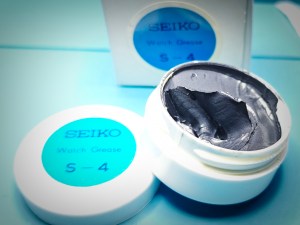
The S-4 watch grease is the lubricant for use where the movement parts are subject to high pressure as well as for metal-on-metal friction. It is a thick black grease that does not flow and contains lithium soap and molybdenum disulphide. This is also available online for around US$32 a tub (US$3200 per kilogramme).

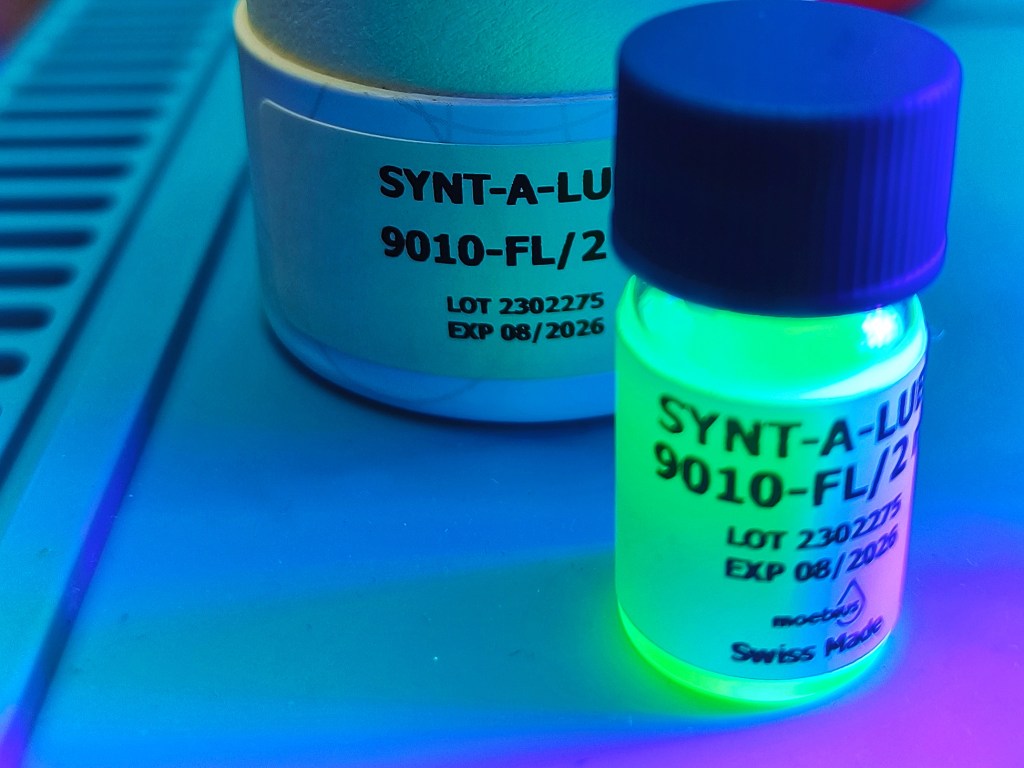
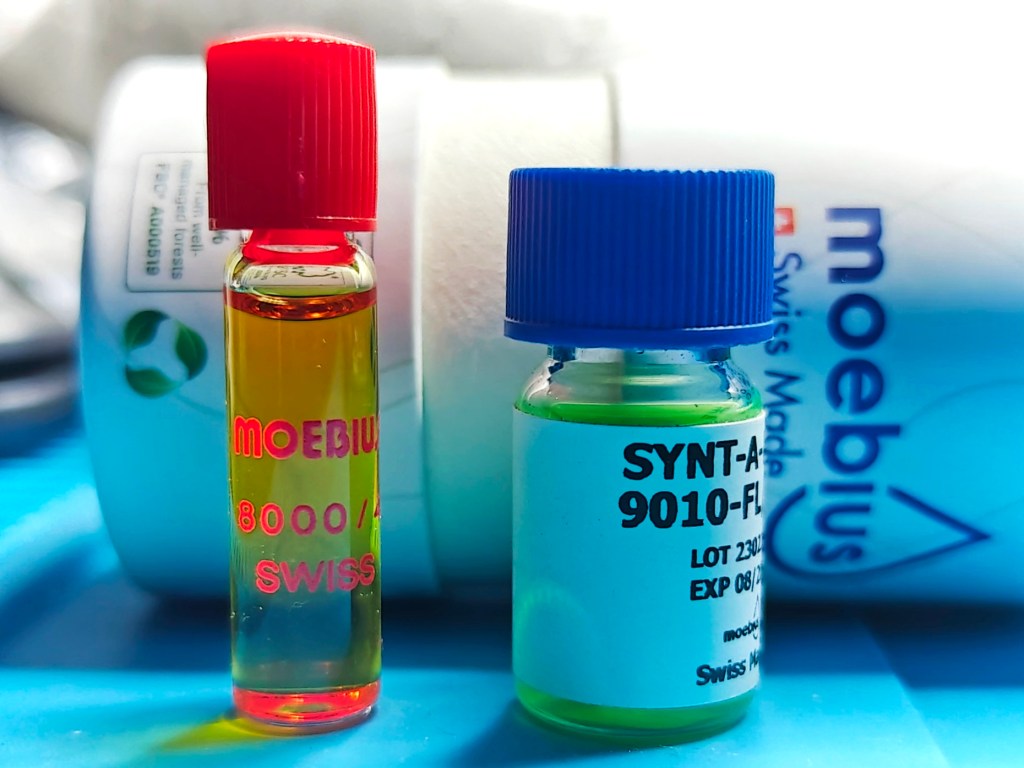
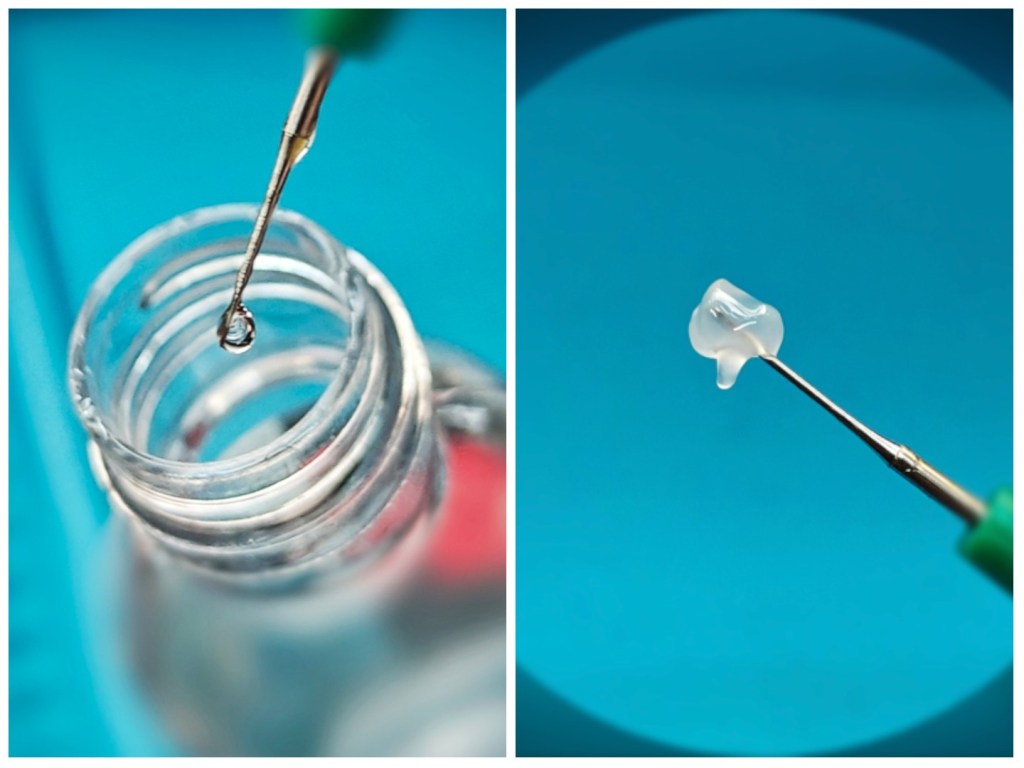
The Moebius Synt-A-Lube is the one for ‘high speed, low torque’ applications and we have two modern alternates for it. One is the aforementioned Moebius 9010 which is fully synthetic, has a long service life and is THE lubricant of choice. It is available in multiple viscosities and even one that fluoresces bright under UV light so we can see how good (or bad) our oiling technique really is! This one is priced at around US$23 for a vial of 2ml (US$11,500 per litre).

Fluorescent Moebius 9010 (under UV light)

There is also a much cheaper alternative to this – the classic Moebius 8000, a natural oil which has a shorter service interval than the synthetic version. This is quite budget friendly at just over US$3 for a 1ml vial (US$3200 per litre).

Silicon grease with the specification of 500,000 centistokes is a very viscous silicone oil and is a necessity for keeping nitrile rubber gaskets supple. It has excellent water repelling properties and is necessary for slick operation of the crown and pusher gaskets and maintaining water resistance and longevity. Applying this to crystal and case back gaskets prevent twisting and slipping thereby reducing chances of damage due to pinching of the gasket. A thick paste like grease is also available and can be used as needed.

High Viscosity Silicone Oil (left) & Silicone Grease (Right)

So there we have it—a simplistic guide to the various greases and oils Seiko recommends for servicing their vintage mechanical movements, designed for fellow enthusiasts. Professional watchmakers can afford a vastly superior range of modern Swiss and Japanese lubricants and their choices are further dictated by factors such as cleaning fluid contamination and inventory concerns. Nevertheless, I will venture to say that the lubricants covered here are quite cost efficient and adequate for beginners to invest in.

On dissolving broken stems and saving crowns

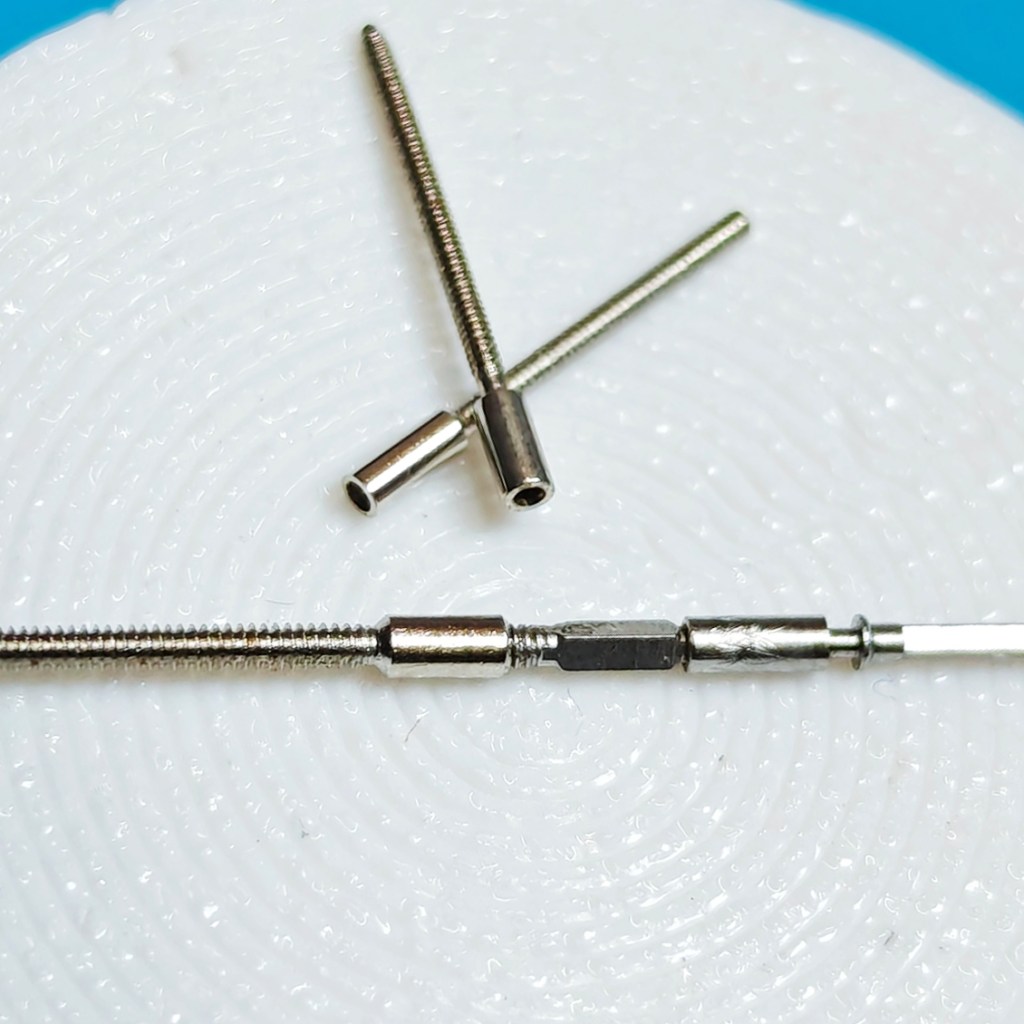
A frequent challenge faced when working on wristwatches is the occasional breakage of a stem, typically near the threaded portion of the crown and often the broken piece is impossible to grip with a pin vice or flush cutters. In the case of vintage watches, replacement stems and crowns may not be readily available. While the broken stem can sometimes be salvaged with the help of stem extenders (illustrated below) rescuing the crown presents a more intricate task, requiring the delicate extraction of the offending stem fragment without causing harm to the crown.

Tap 9 and Tap 10 extenders (top)
A stem threaded into an extender (bottom)

Scouring through the internet, the oft found bit of wisdom is to first prepare a saturated solution of alum powder, (potassium aluminium sulphate) which is available is speciality grocery stores. The crown with the broken stem is submerged in the solution and over the course of several hours or days (sometimes requiring the application of heat) the softer steel of the broken stem dissolves into the alum solution forming a black sludge. Meanwhile the harder stainless steel (or brass, aluminium, copper and even gold-plating) of the crown-in-distress is unaffected.

The advice is perfectly fine and works as advertised. However, when we come to Seiko watches, there is a frustrating surprise lying in wait. MOST STEMS MADE BY SEIKO ARE OF STAINLESS STEEL!

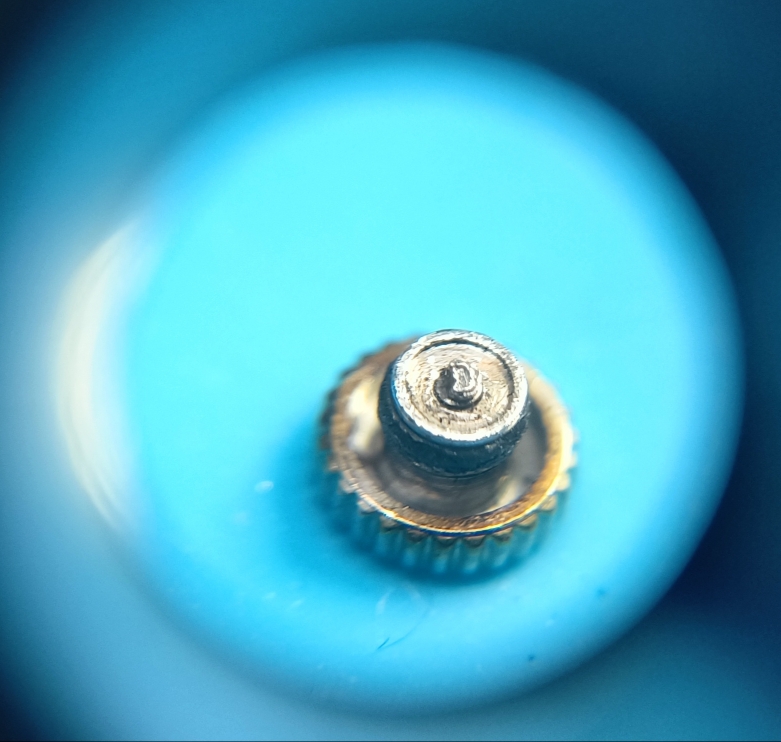
Submerging a Seiko stem and crown in alum solution, even at elevated temperatures, proves futile. Heated alum solution (and even concentrated acetic acid/ vinegar) does nothing. The offending crown in my case was a 50M04NS crown from a beaten up 6119-6400, popularly known as the UFO. The stem in question, the 357612, features a square shoulder at the crown end for a tiny gear bearing the part number 998613 supported by a spring. This configuration is found in the Seiko 61 series of calibres with internal rotating bezels, correctly termed as the Rotating Dial Ring. While the stem could not be saved due to being rusted solid, the crown remained in fair condition. Although not rare, and aftermarket reproductions in plentiful supply, I still tried to look around for some guidance to save the target of my attention.

During a conversation with a seasoned collector and restorer who goes by the moniker ‘saldog’, and boasts of a far more experience in collecting vintage Seikos than myself, I stumbled upon a working solution (pun intended).

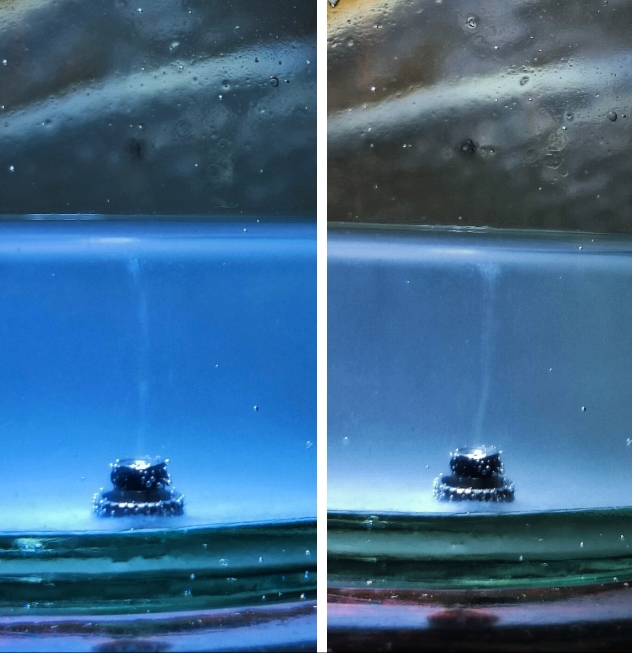
Descaling powder, used commonly for cleaning coffee pots, dishwashers and washing machines was the answer. A saturated solution proved effective in targeting the heat-treated and hardened stainless steel of the stem while leaving the softer stainless steel of the crown unscathed. Accelerating the process is possible by heating the solution, perhaps on a coffee mug warmer. As you can see below a merry stream of bubbles erupts from the tip of the broken stem while the crown remains unharmed.

And there you have it—a guide for all fellow enthusiasts to follow when faced with a broken stem lodged in a crown out of a Seiko, desperately in need of redemption.