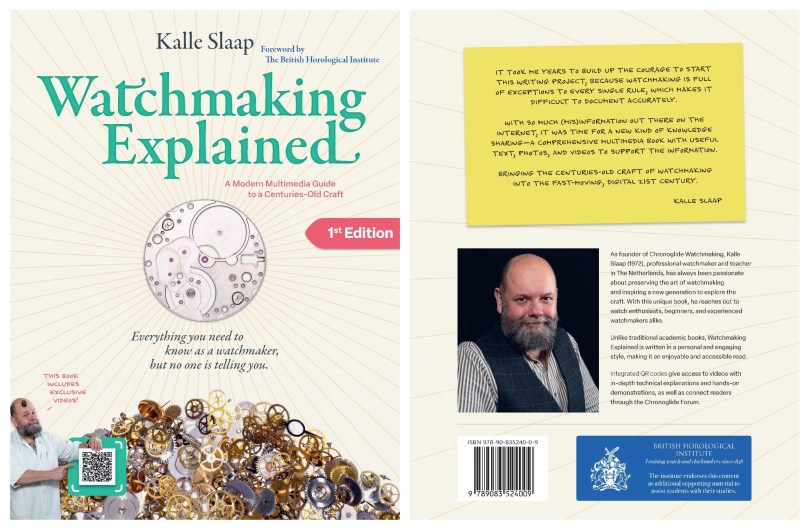
“Watchmaking Explained” by Kalle Slaap, Chronoglide – First Impressions and a Quick Review

Sunday afternoon today brought an unexpected joy in the form of a phone call followed by immediate delivery of the 1st Edition of “Watchmaking Explained” by Kalle Slaap of Chronoglide. Delivery in 4 days from The Netherlands to India covering nearly 8,300kms for less than €10 is an impressive example of modern logistics!
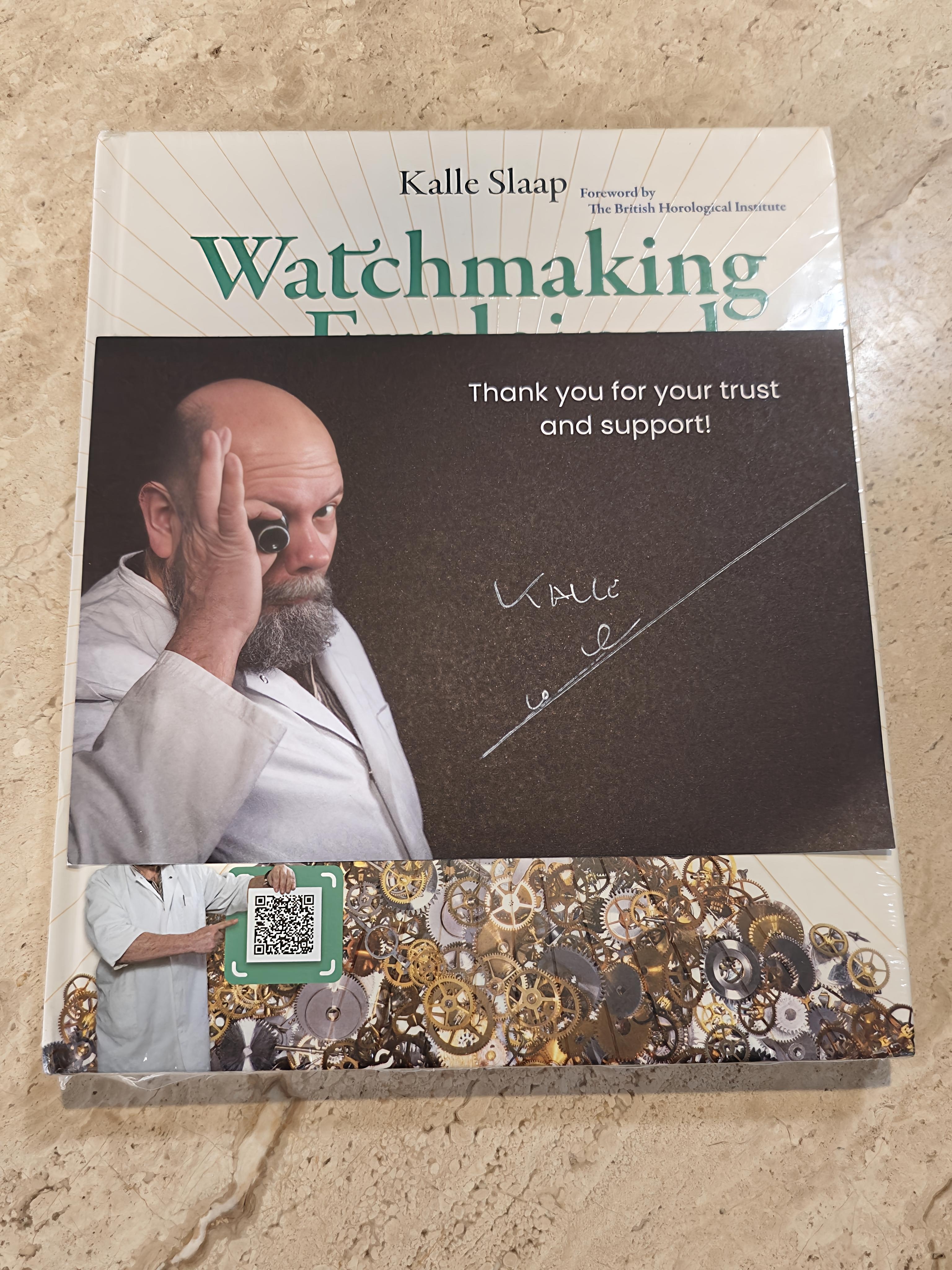
The book itself, a hardbound copy consisting of 278 glossy, beautifully printed heavy paper with coloured edge printing and a textured cover reminiscent of sun rays, is superb to behold. The Title Page carries a profound quote – “INTELLIGENT PEOPLE ARE FULL OF DOUBT, WHILE THE FOOLISH ARE OVERFLOWING WITH CONFIDENCE” echoes my own journey as I faced the Slope of Enlightenment of the Dunning-Kruger effect.

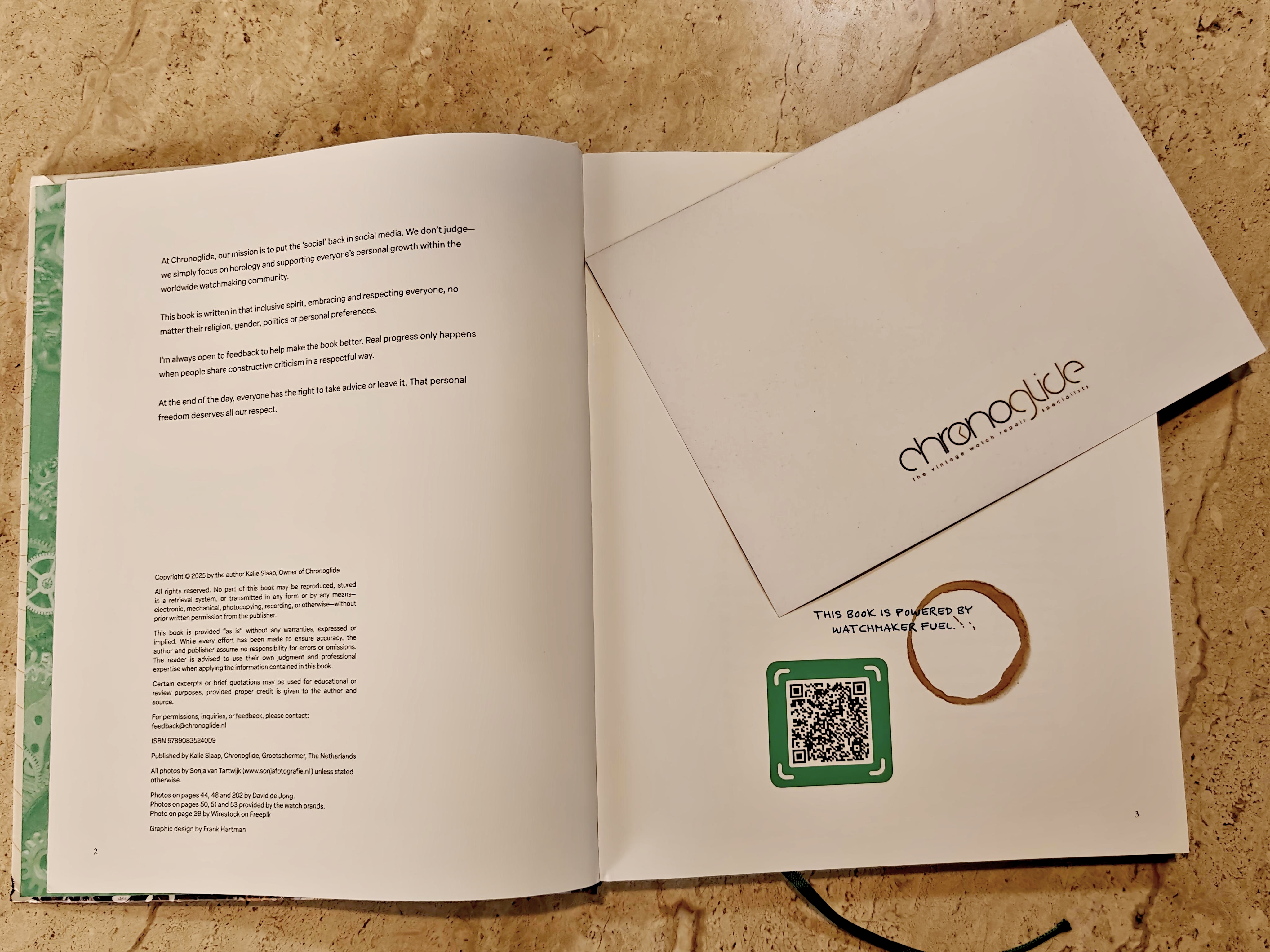
I couldn’t help but chuckle when turning the page, there was a coffee ring stain from a cup of ‘WATCHMAKER FUEL!’
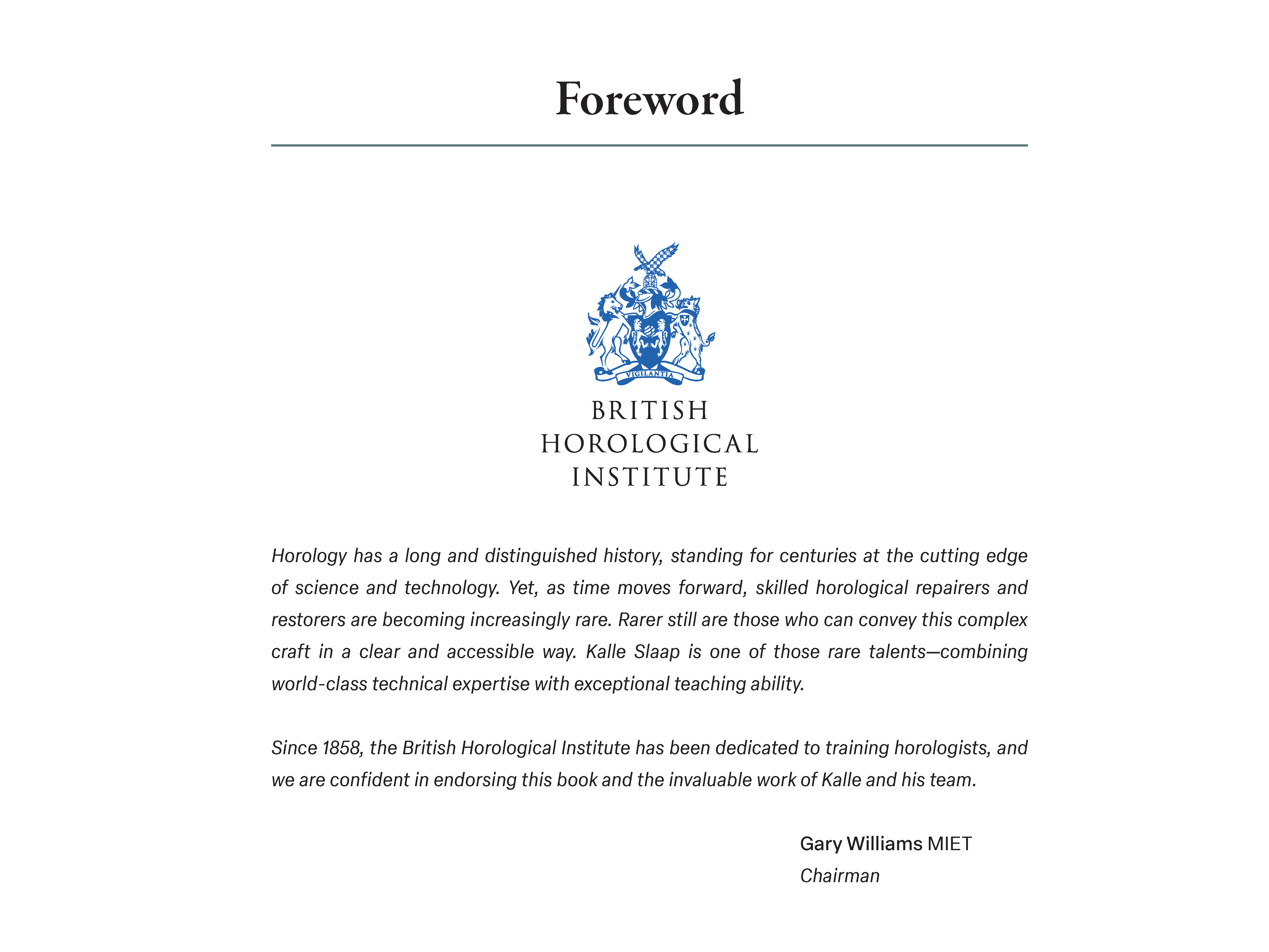
Endorsed by the British Horological Institute, this book is aimed at amateur hobbyists like me who have not had a formal, professional education in the science and art of watchmaking. Kalle words it best in the Preface when he says:

“This book will not make you a seasoned watchmaker just by reading it, but I want to make the amazing craft of watchmaking easy to grasp and to lower the threshold to start and try it for yourself.

It is my mission to share best practice solutions and explain watchmaking in the most understandable way possible. That is why I chose to write this text in an informal way. This book will point out most pitfalls that can kill your enthusiasm as an aspiring watchmaker.”

To make the book relevant in the fast-moving, digital 21st century and accessible to a broad audience, the book combines traditional horological knowledge with modern interactive elements and videos together with social media connection through the Chronoglide Forum to enhance the learning experience.

You can see Kalle explain more in this YouTube video:

A demo of the book is available at: https://www.chronoglide.nl/boek/aff/5/ and posted below.
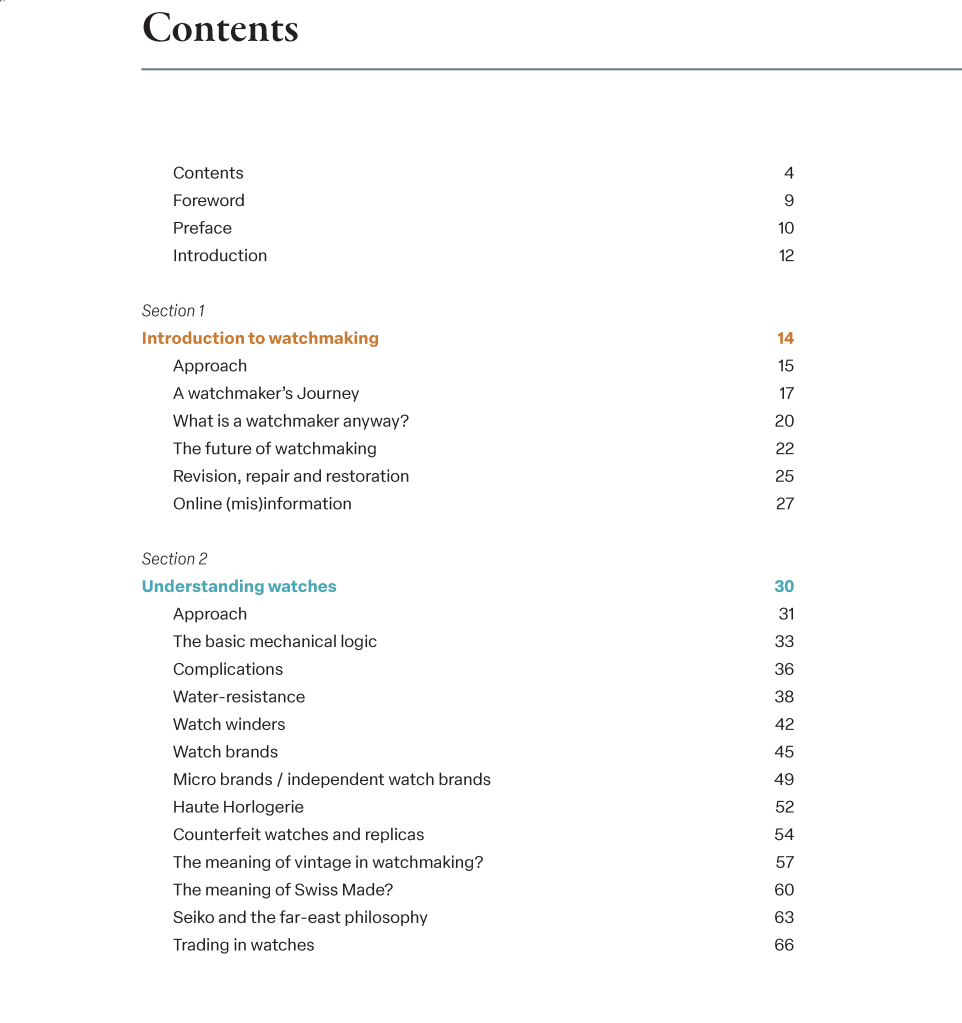
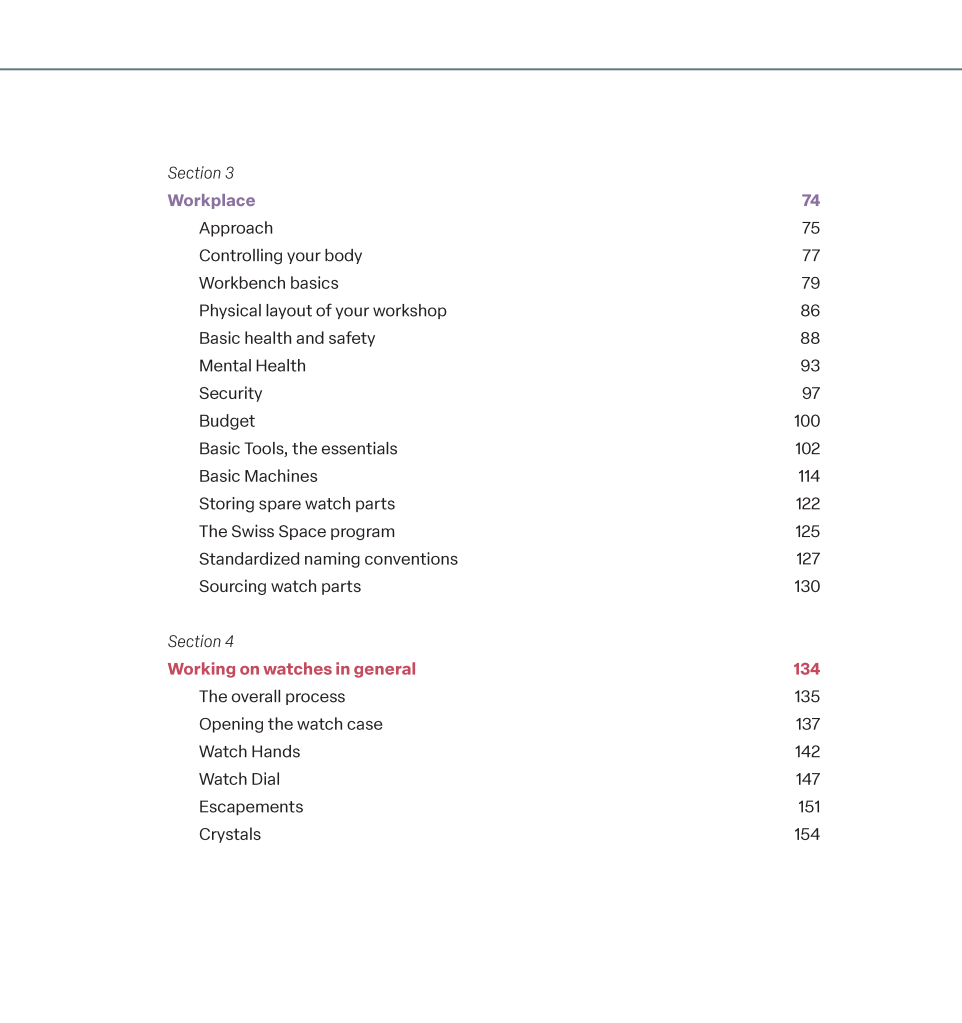
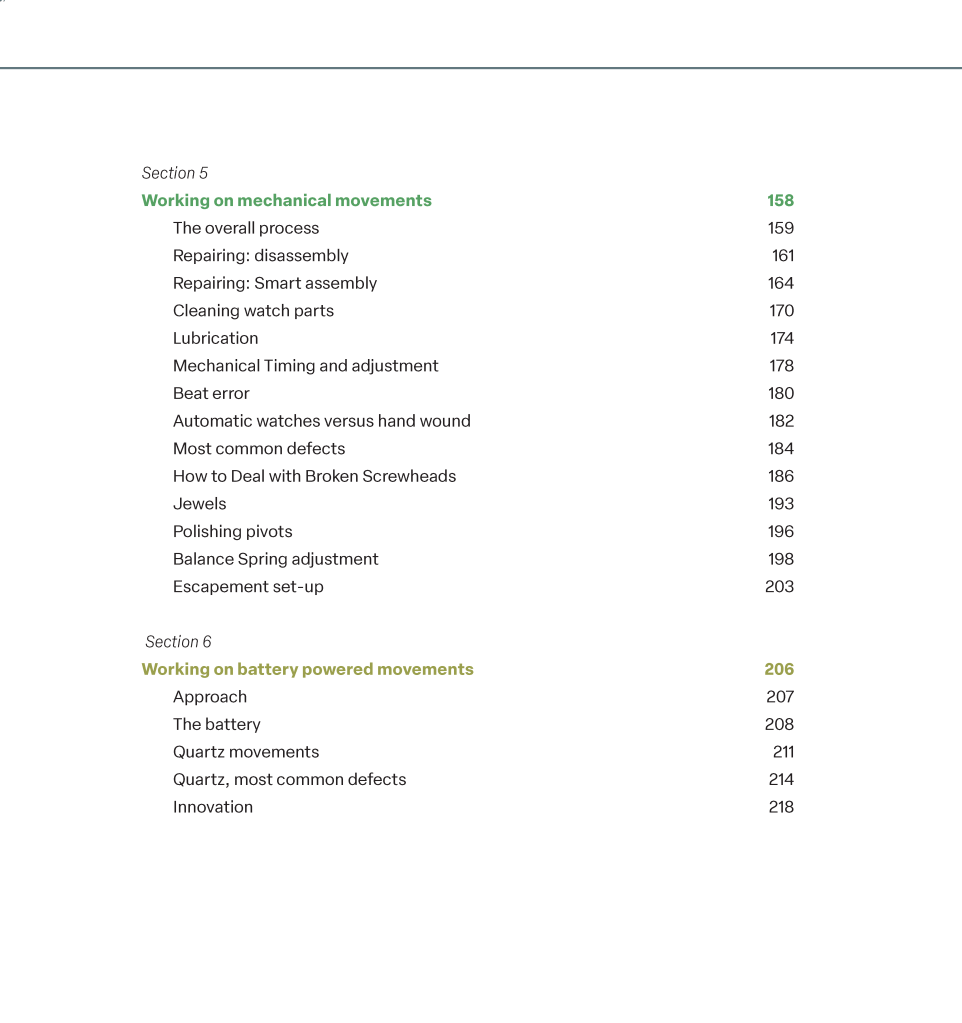
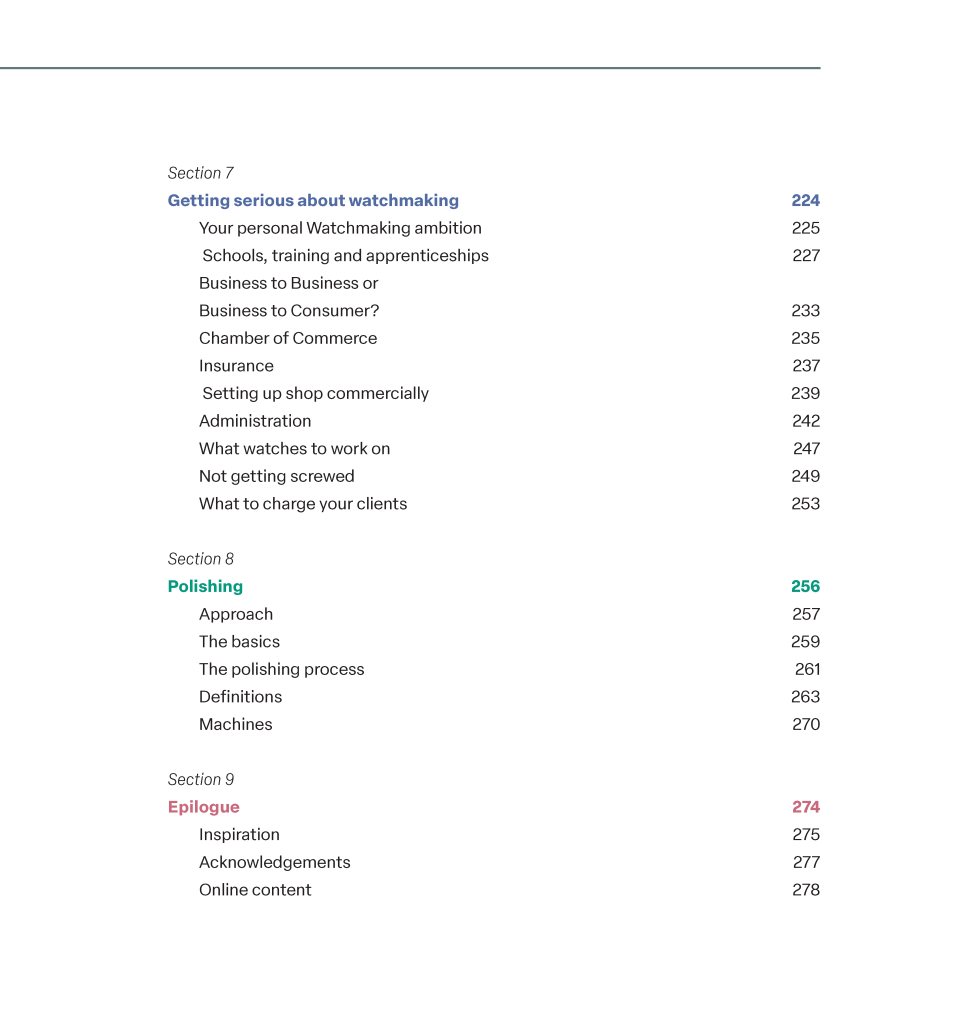
As seen in the contents pages above, the book is divided into 8 main sections. The first 2 sections lay the groundwork by covering the essential basics, offering clear explanations of fundamental concepts, definitions, and terminology used in the field of watchmaking. The 3rd section provides comprehensive instructions on how to create and maintain an efficient and organized workspace tailored for watchmaking. It explores the essential tools and basic machinery needed, along with valuable tips on how to properly store, source and purchase watch parts ensuring novices are well-prepared to establish a professional and functional environment for their craft.

Sections 4, 5 and 6 explore in depth both the theoretical principles and hands-on techniques involved in repairing and maintaining mechanical and battery-powered watches. Along with giving a methodical approach to the process, these sections also provide practical solutions and troubleshooting tips for problems commonly faced. Section 7 covers the topic of personal ambition, how to enter the watchmaking industry professionally and commercially and safeguards one’s own interest as well as that of one’s customers and finally section 8 gives introductory lessons on polishing watch cases.

As an amateur hobbyist myself, I believe this book offers a fantastic introduction to watchmaking as it strikes a great balance by presenting the subject in a relaxed, accessible way while still offering a wealth of technical knowledge and essential guidance for aspiring watchmakers. It offers a fresh, modern take on both theory and practice and differs from the academic and serious ‘standard reading material’ of watchmaking schools by providing a light-hearted, engaging and friendly reading experience complemented by striking photography.

The book is available for purchase through Chronoglide’s official website and also through my affiliate link for ordering –

https://www.chronoglide.nl/aff/5/?product=watchmaking-explained-the-first-interactive-watchmaking-book-in-the-world

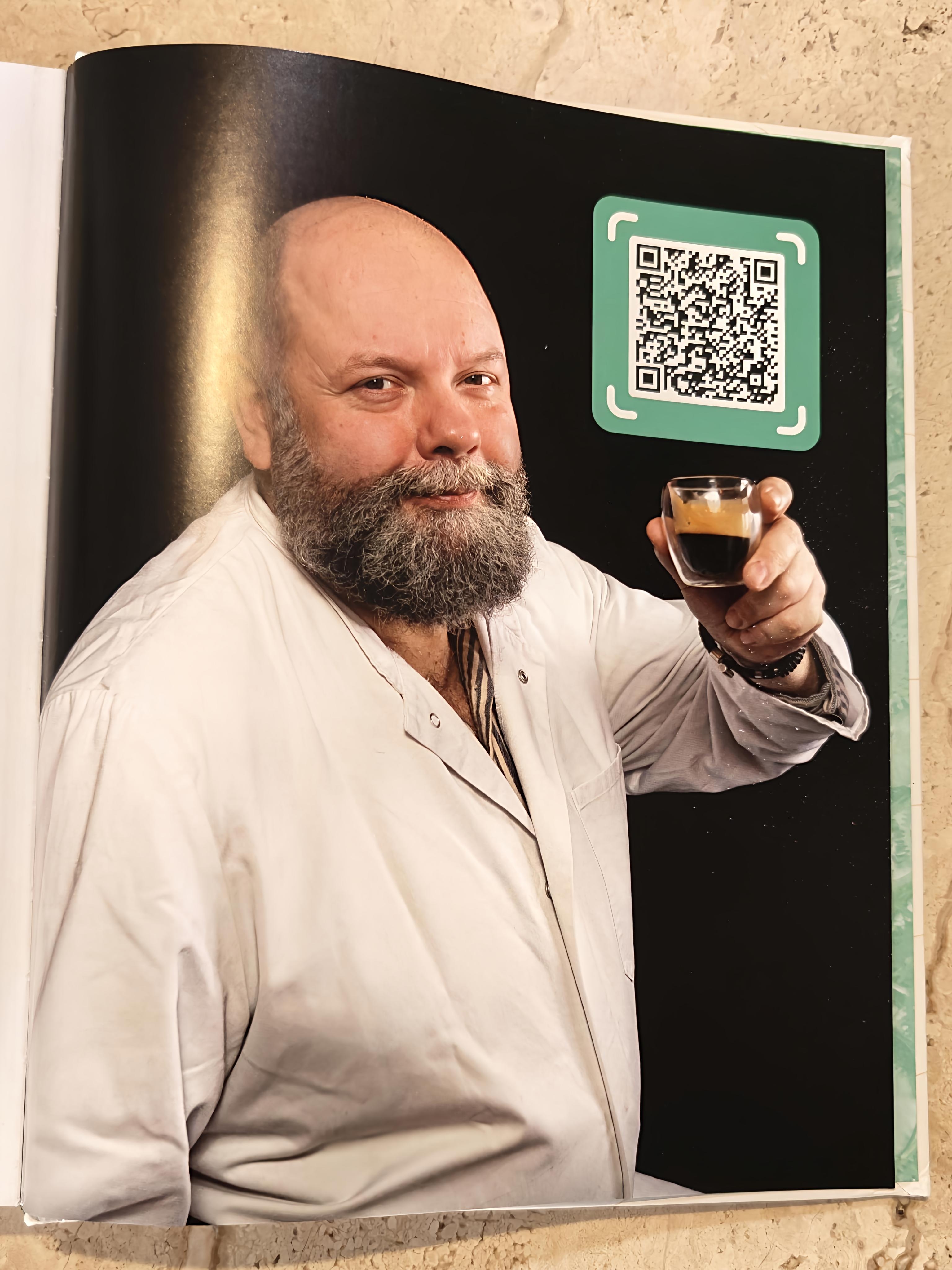
 If you order through the link, I will receive commissions and can buy more delicious coffee!

Happy reading!
theindianseikosmith

On Oils and Greases as prescribed by Seiko

Mastering the art of lubricating or oiling mechanical watch movements is intricate and the correct choice of lubricants has always sparked palaverous debate.

Novices such as myself have spent hours poring over numerous forum posts and have read lengthy comments by experienced watchmakers in trying to determine which lubricating oils and greases are the most essential and are ‘universally’ acceptable, if there is indeed such a thing.

The driving force behind this phenomenon are, firstly, the vast selection of modern Swiss made oils and greases, and secondly, their equally lofty prices. A widely circulated piece of internet folklore is the exorbitant cost of inkjet printers’ ink, which, according to a popular publisher, is quoted as US$5,654 per litre. Watchmaking is in another league however. The quintessential Moebius oil used in servicing watches – the Moebius 9010 – costs a staggering US$11,500 per litre at popular online retailers!

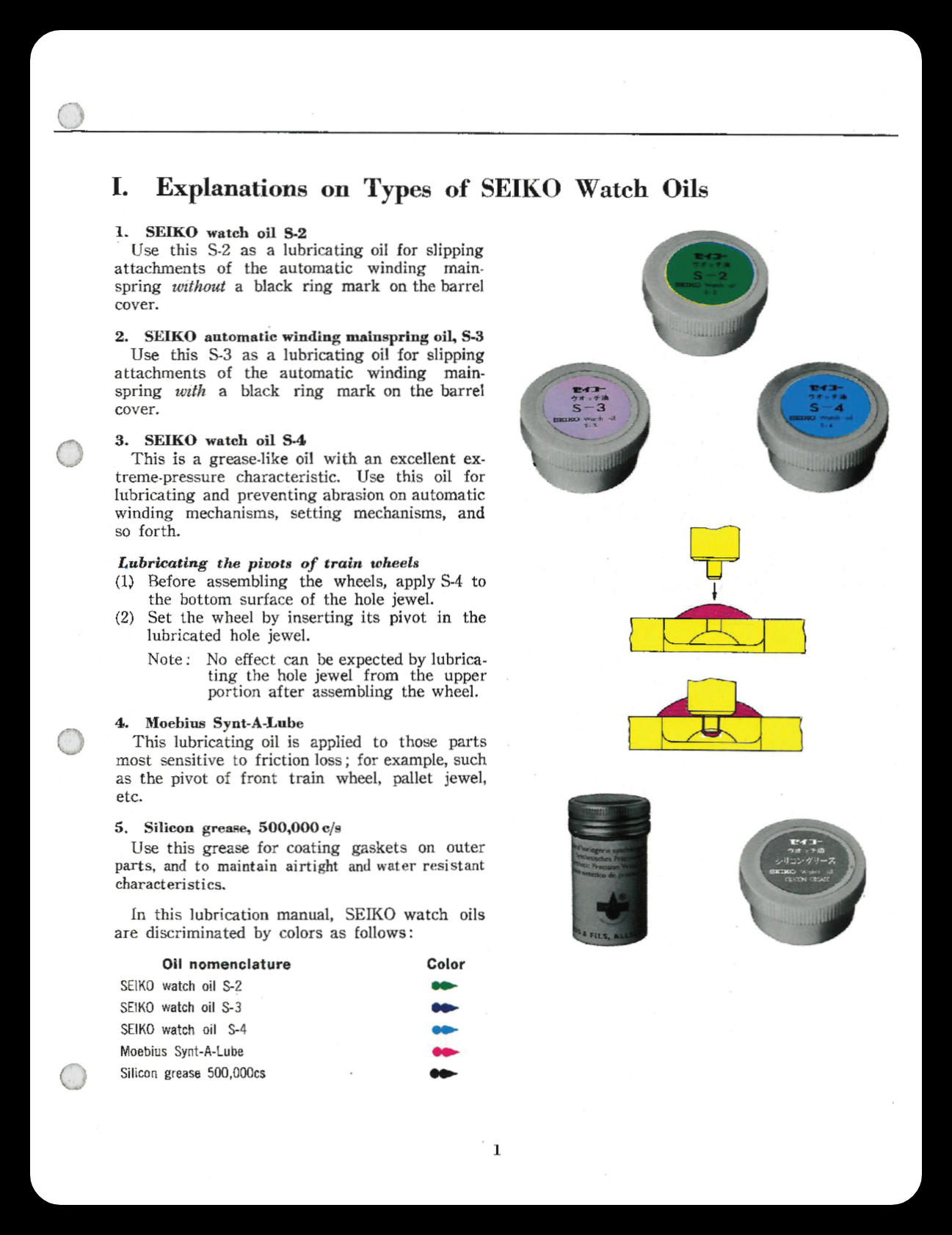
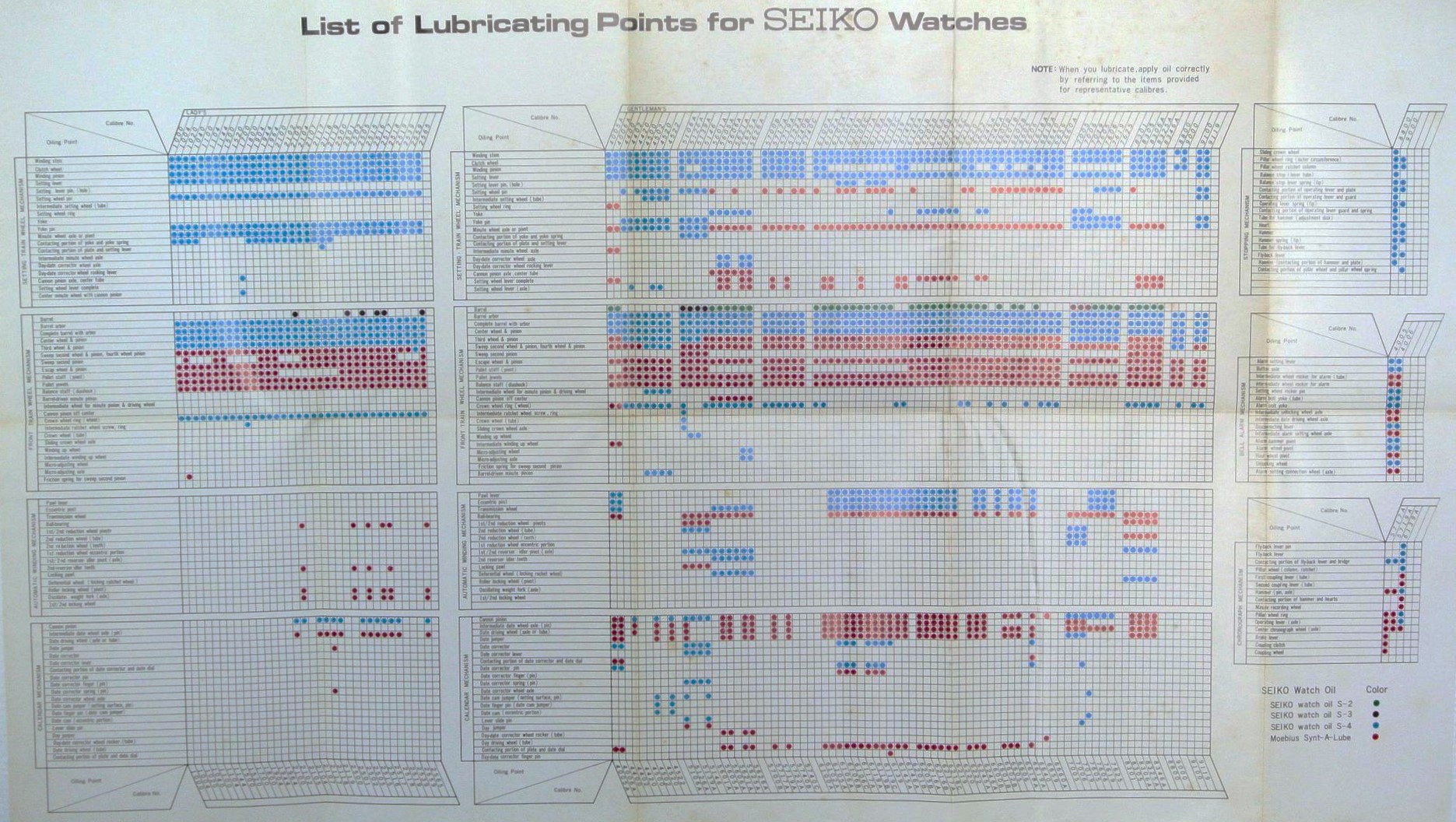
For the beginners however, there is respite when it comes to vintage Seiko. Perusing the official Technical Guide, we come across the following 5 basic oils, the simply named S-2, S-3 and S-4 made by Seiko Corp., the Moebius Synt-A-Lube and a regular silicon grease.

Additionally, there is an S-6 watch grease also by Seiko. It is recommended for servicing a few calibres of both the Suwa and the Daini factories such as the 6306, 6309, 7016 etc as well as the modern 7Sxx and 4Rxx calibres. However, I was unable to acquire it as it has been out of production for quite some time. Experts liken it to a soft gel like silicon-based grease and is needed for the ‘pawl lever and second reduction wheel of automatic winding mechanisms’ in these calibres. Moebius HP-1300 or the Seiko S-4 is an alternative.

There is also this concise and efficiently presented chart of lubricating points for Seiko watches available on the internet and I am currently looking for a higher resolution one or an actual print. If any of you readers can point me in the right direction, it will be most helpful.

Similar to the S-6, the S-2 mainspring grease is also long out of production. It was a graphite based thick grease for ‘slipping attachments of the automatic winding mainspring’, otherwise known as “BRAKING GREASE”.

The S-3 mainspring grease is also another graphite based braking grease and is thick and slightly oily. Others as well as I have used it in Seiko mainspring barrels with good result and this retails for around US$26 for a 10 gram tub (US$2,600 per kilogramme).

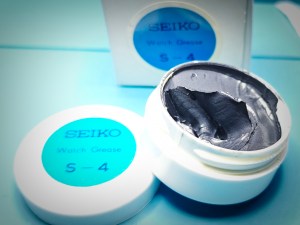
The S-4 watch grease is the lubricant for use where the movement parts are subject to high pressure as well as for metal-on-metal friction. It is a thick black grease that does not flow and contains lithium soap and molybdenum disulphide. This is also available online for around US$32 a tub (US$3200 per kilogramme).

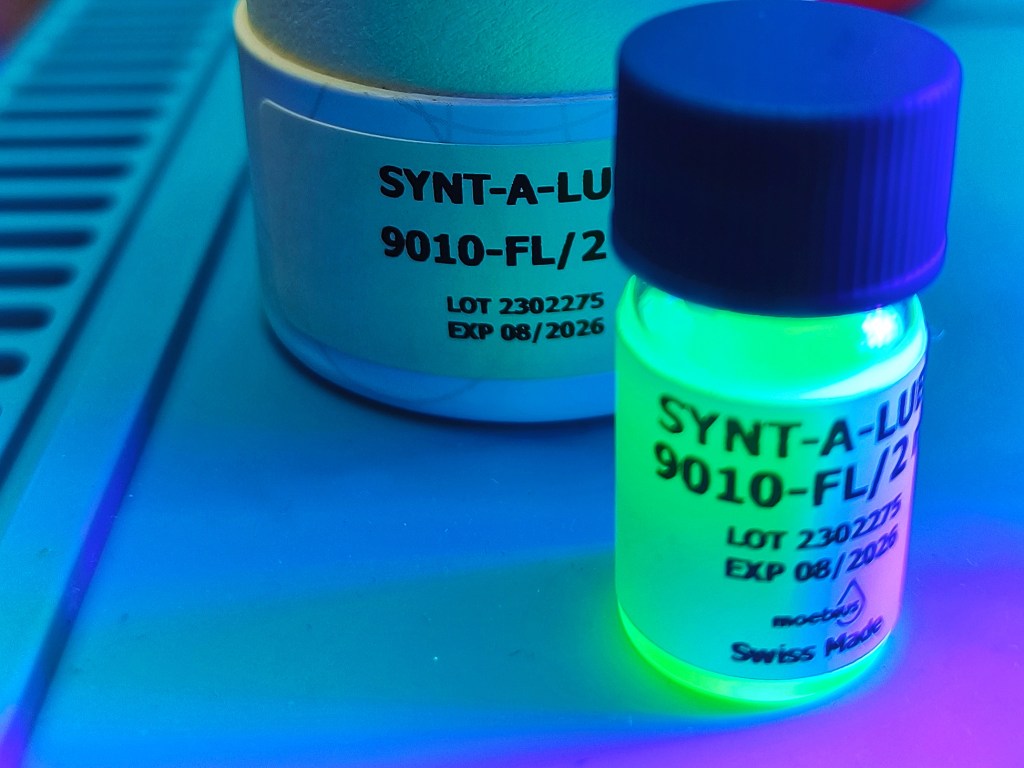
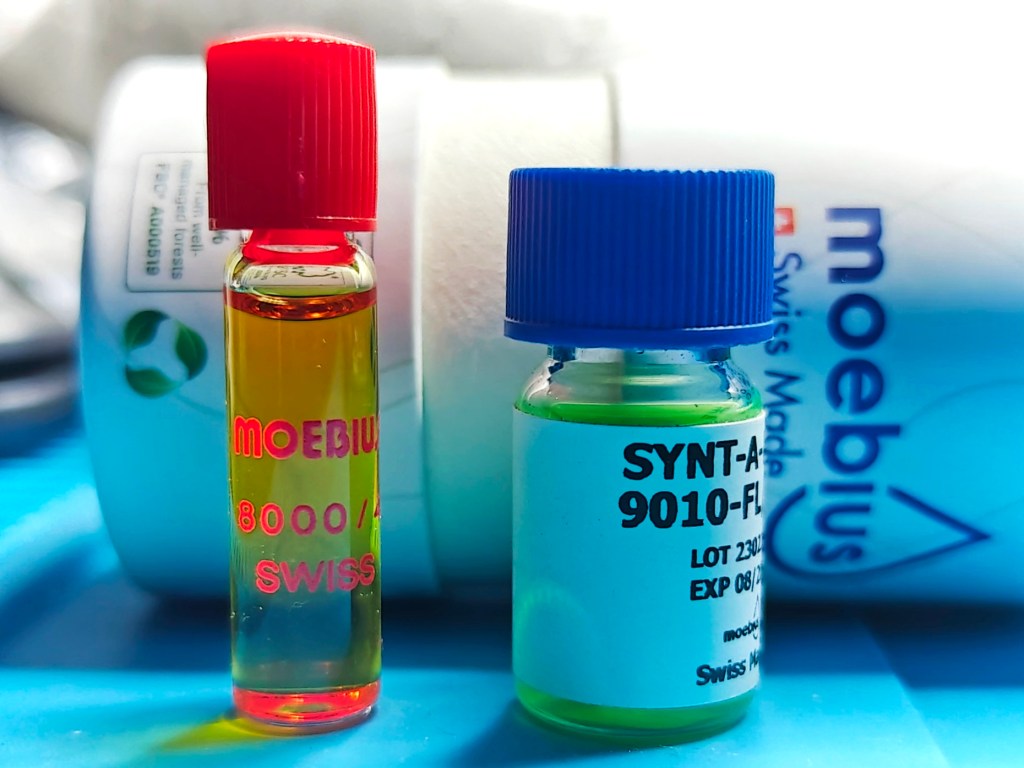
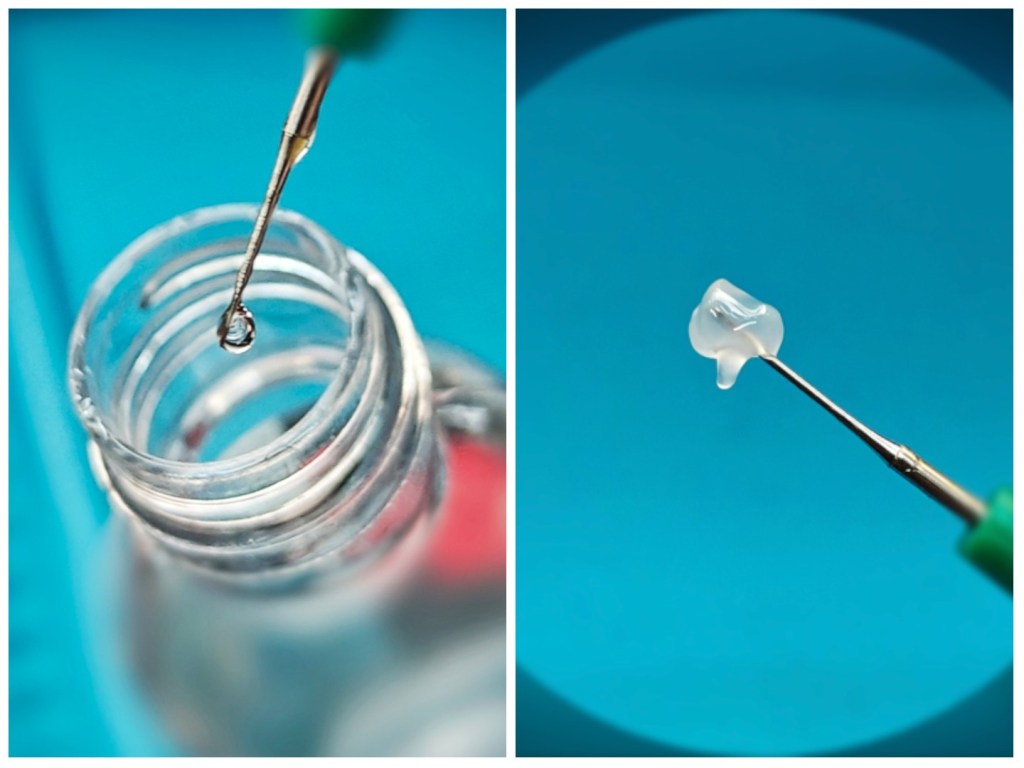
The Moebius Synt-A-Lube is the one for ‘high speed, low torque’ applications and we have two modern alternates for it. One is the aforementioned Moebius 9010 which is fully synthetic, has a long service life and is THE lubricant of choice. It is available in multiple viscosities and even one that fluoresces bright under UV light so we can see how good (or bad) our oiling technique really is! This one is priced at around US$23 for a vial of 2ml (US$11,500 per litre).

Fluorescent Moebius 9010 (under UV light)

There is also a much cheaper alternative to this – the classic Moebius 8000, a natural oil which has a shorter service interval than the synthetic version. This is quite budget friendly at just over US$3 for a 1ml vial (US$3200 per litre).

Silicon grease with the specification of 500,000 centistokes is a very viscous silicone oil and is a necessity for keeping nitrile rubber gaskets supple. It has excellent water repelling properties and is necessary for slick operation of the crown and pusher gaskets and maintaining water resistance and longevity. Applying this to crystal and case back gaskets prevent twisting and slipping thereby reducing chances of damage due to pinching of the gasket. A thick paste like grease is also available and can be used as needed.

High Viscosity Silicone Oil (left) & Silicone Grease (Right)

So there we have it—a simplistic guide to the various greases and oils Seiko recommends for servicing their vintage mechanical movements, designed for fellow enthusiasts. Professional watchmakers can afford a vastly superior range of modern Swiss and Japanese lubricants and their choices are further dictated by factors such as cleaning fluid contamination and inventory concerns. Nevertheless, I will venture to say that the lubricants covered here are quite cost efficient and adequate for beginners to invest in.

On dissolving broken stems and saving crowns

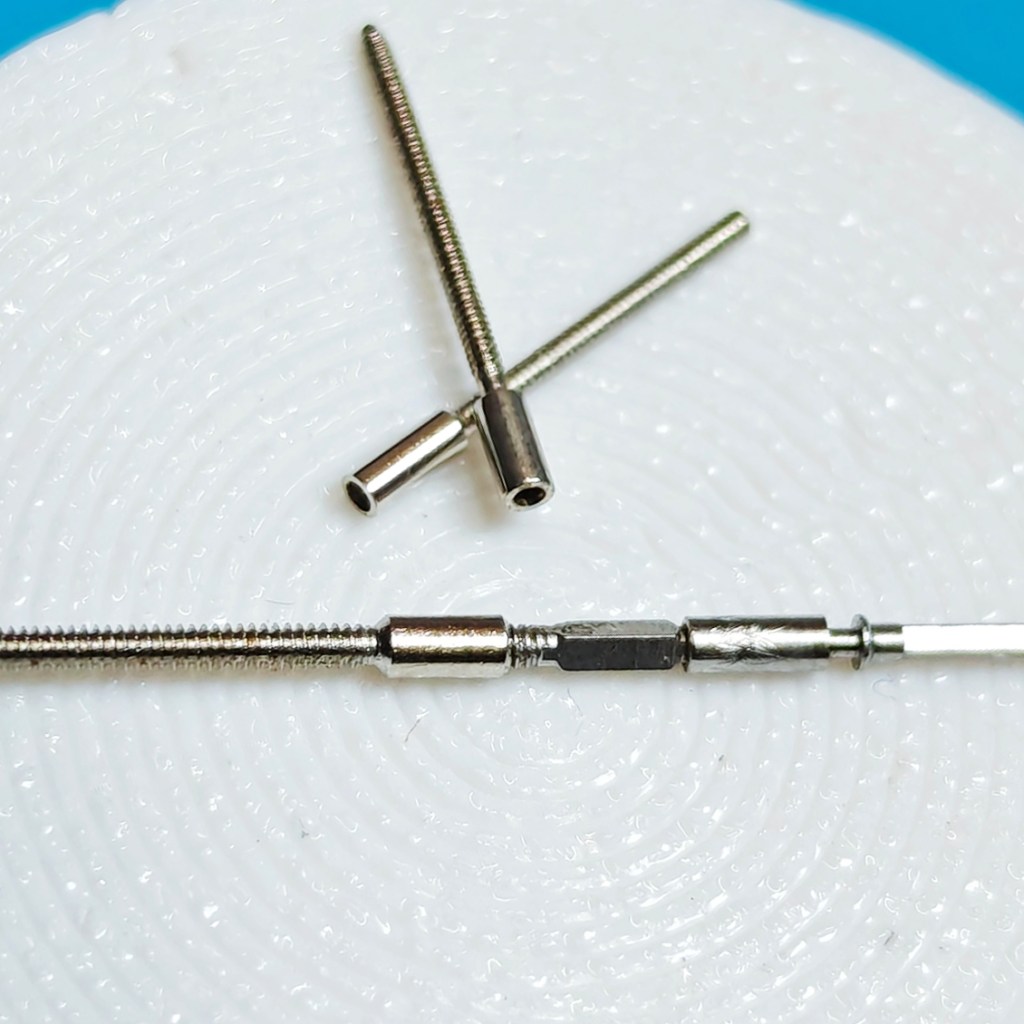
A frequent challenge faced when working on wristwatches is the occasional breakage of a stem, typically near the threaded portion of the crown and often the broken piece is impossible to grip with a pin vice or flush cutters. In the case of vintage watches, replacement stems and crowns may not be readily available. While the broken stem can sometimes be salvaged with the help of stem extenders (illustrated below) rescuing the crown presents a more intricate task, requiring the delicate extraction of the offending stem fragment without causing harm to the crown.

Tap 9 and Tap 10 extenders (top)
A stem threaded into an extender (bottom)

Scouring through the internet, the oft found bit of wisdom is to first prepare a saturated solution of alum powder, (potassium aluminium sulphate) which is available is speciality grocery stores. The crown with the broken stem is submerged in the solution and over the course of several hours or days (sometimes requiring the application of heat) the softer steel of the broken stem dissolves into the alum solution forming a black sludge. Meanwhile the harder stainless steel (or brass, aluminium, copper and even gold-plating) of the crown-in-distress is unaffected.

The advice is perfectly fine and works as advertised. However, when we come to Seiko watches, there is a frustrating surprise lying in wait. MOST STEMS MADE BY SEIKO ARE OF STAINLESS STEEL!

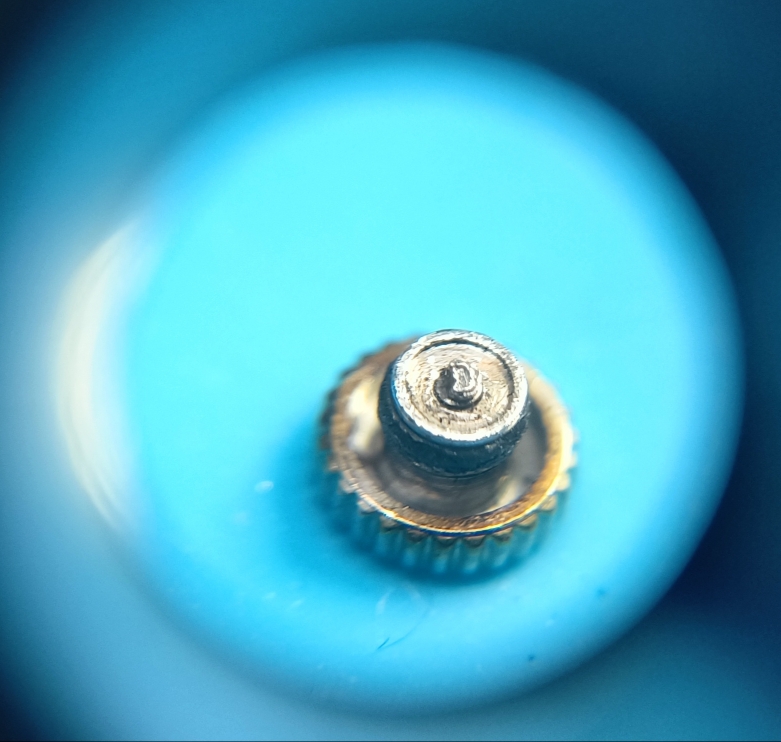
Submerging a Seiko stem and crown in alum solution, even at elevated temperatures, proves futile. Heated alum solution (and even concentrated acetic acid/ vinegar) does nothing. The offending crown in my case was a 50M04NS crown from a beaten up 6119-6400, popularly known as the UFO. The stem in question, the 357612, features a square shoulder at the crown end for a tiny gear bearing the part number 998613 supported by a spring. This configuration is found in the Seiko 61 series of calibres with internal rotating bezels, correctly termed as the Rotating Dial Ring. While the stem could not be saved due to being rusted solid, the crown remained in fair condition. Although not rare, and aftermarket reproductions in plentiful supply, I still tried to look around for some guidance to save the target of my attention.

During a conversation with a seasoned collector and restorer who goes by the moniker ‘saldog’, and boasts of a far more experience in collecting vintage Seikos than myself, I stumbled upon a working solution (pun intended).

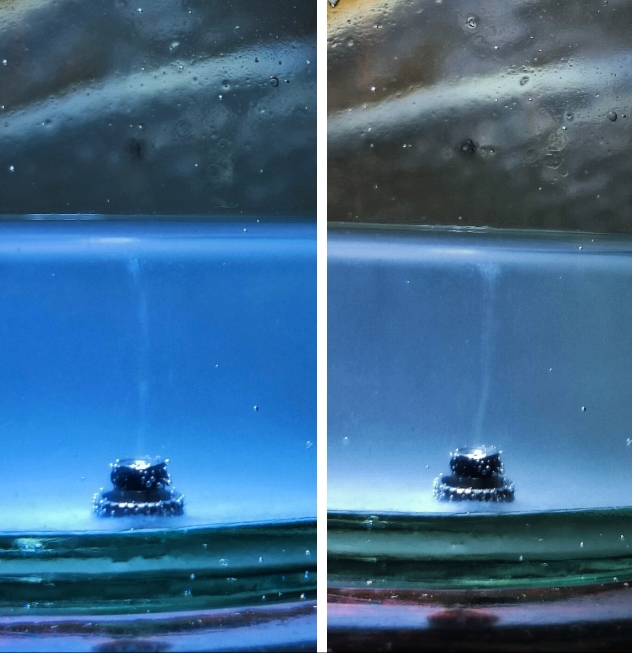
Descaling powder, used commonly for cleaning coffee pots, dishwashers and washing machines was the answer. A saturated solution proved effective in targeting the heat-treated and hardened stainless steel of the stem while leaving the softer stainless steel of the crown unscathed. Accelerating the process is possible by heating the solution, perhaps on a coffee mug warmer. As you can see below a merry stream of bubbles erupts from the tip of the broken stem while the crown remains unharmed.

And there you have it—a guide for all fellow enthusiasts to follow when faced with a broken stem lodged in a crown out of a Seiko, desperately in need of redemption.

An introduction

Welcome everyone to the first instalment of my blog! Here, I aim to chronicle my profound fascination, and what I hope to be a long and serious affair, with vintage mechanical timepieces, particularly highlighting the allure of Seiko’s enchanting and reliable vintage watches!

My venture into collecting and restoring old Seikos has its roots in my childhood when I often dismantled things to uncover their inner workings (and rendering them non-functional in the process). Looking back, it’s clear that the absence of today’s ubiquitous digital devices played a profound role as well.

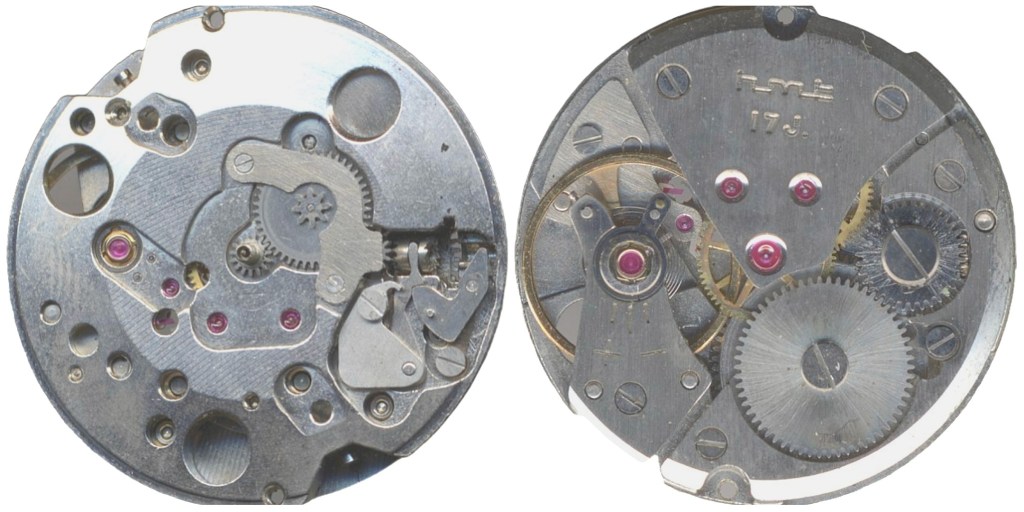
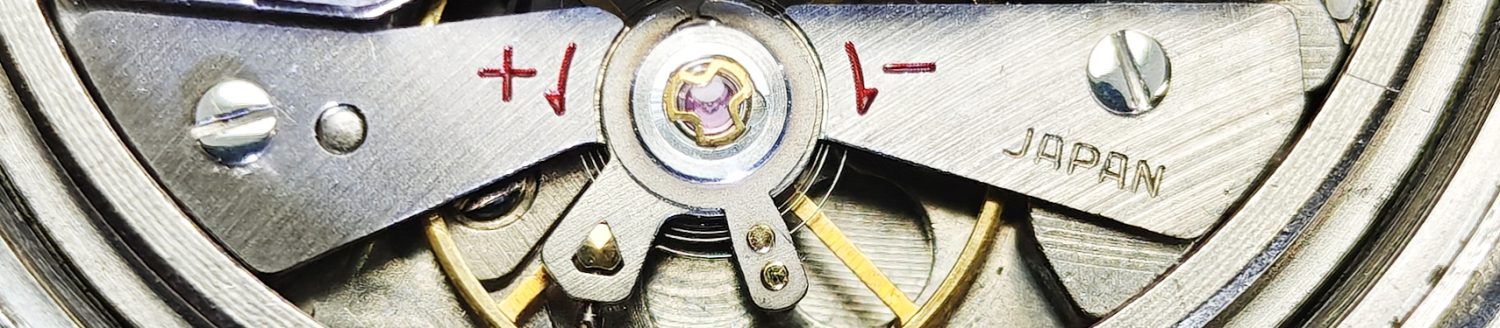
As I mentioned in the “About” page here, while tinkering with DIY kits and preparing Arduino sketches, one of the most impactful events to affect all of humanity struck in the early months of 2020. Stumbling upon an old HMT mechanical watch, most of which are powered by the 17-jewel hand-winding calibre 020 licensed from Citizen, I found myself with ample time during the lockdown. With no better activity in mind, I decided to crack it open, turned to a YouTube tutorial, and the rest, as they say, is history.

Fumbling through the initial steps, dismembering old movements, acquiring necessary tools and absorbing insights from seasoned experts through online posts and videos followed by hours hunched over my makeshift bench, I now find myself in the humbling depths of the Dunning-Kruger effect. Now, I want to embark on this blog as an act of self-encouragement with the audacious aim of furthering my education and learning more about restoration and repair of vintage watches.

Needless to say, I do not have any formal training as a watchmaker . With only the opportunity for self-instruction at my disposal, I regularly make comical blunders, perhaps an indication that I am taking my first steps up the “Slope of Enlightenment”.

The aim here is to share anything I find captivating and worthy of preservation with fellow aficionados. This exercise is purely a journey of self-discovery and I fully appreciate that the wealth of expertise and superior resources wielded by seasoned individuals in the vintage watch repair and restoration community far surpasses my own. I refrain from working on others’ watches primarily due to time constraints as my own pursuits take up much of my time. Moreover, I prefer having sole ownership of the outcomes, whether good or bad, resulting from my explorations and creative endeavours.

I am excited and look forward to presenting before you a wide array of mechanical watches, mainly from Seiko, with intermittent features of electric or quartz timepieces. Occasionally, there may be highlights from other manufacturers.